
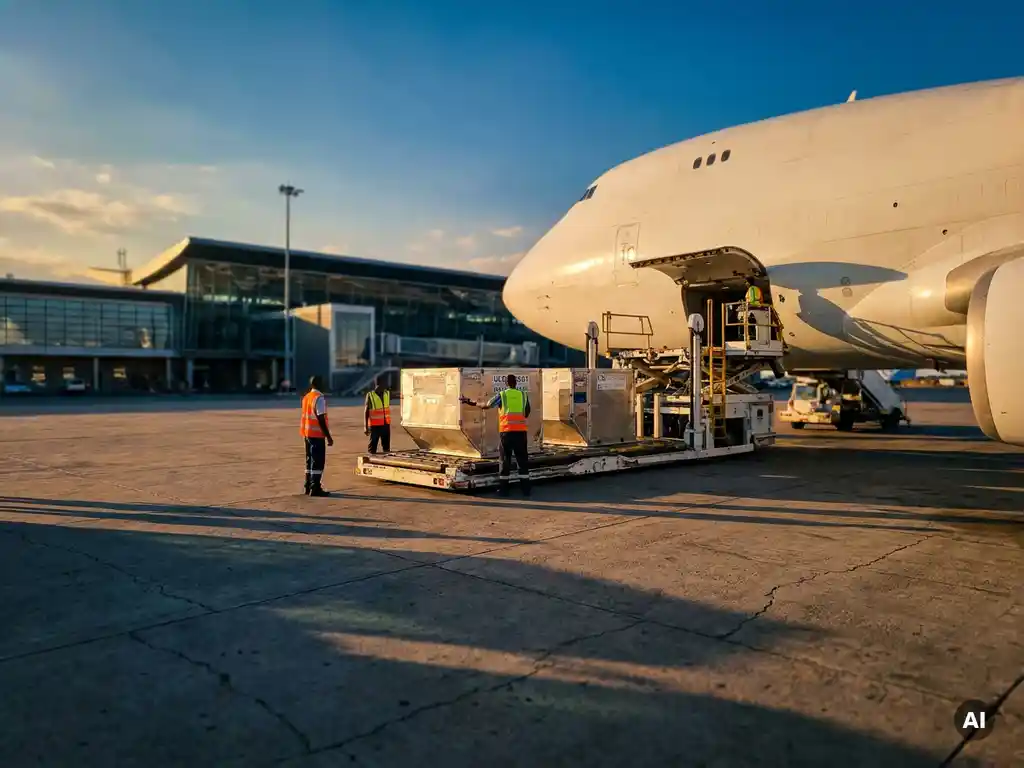
The busiest air cargo airports in Africa are Johannesburg O.R. Tambo International, Cairo International, and Nairobi Jomo Kenyatta International. These three airports consistently handle the highest freight volumes on the continent, driven by their geographic position, airline connectivity, and investment in dedicated cargo infrastructure. The sections below break down why certain airports dominate, how hubs differ from transit points, and what this means for businesses shipping goods from Europe to Africa.
Which African airports handle the highest cargo volumes?
Johannesburg O.R. Tambo, Cairo International, and Nairobi Jomo Kenyatta are the three African airports with the highest air cargo throughput. Johannesburg leads in sub-Saharan Africa due to its size, industrial base, and connections to Southern African markets. Cairo serves as the primary gateway for North Africa and the broader Middle East corridor. Nairobi anchors East African air freight.
Beyond this top tier, several other airports handle significant volumes for their respective regions:
- Lagos Murtala Muhammed International (Nigeria) — the busiest cargo airport in West Africa, serving one of the continent’s largest consumer and industrial markets
- Accra Kotoka International (Ghana) — a growing hub for West Africa, with improving cargo handling facilities and strong connections to European carriers
- Addis Ababa Bole International (Ethiopia) — the home base of Ethiopian Airlines Cargo, one of the most active cargo carriers on the continent
- Casablanca Mohammed V International (Morocco) — an important gateway for North and West Africa, with Royal Air Maroc Cargo operating a broad network
Volume alone does not determine which airport is the right entry point for a specific shipment. The destination country, available direct services from Europe, and local customs capacity all shape the routing decision for air freight to Africa.
Why do certain African airports dominate air freight routing?
African airports dominate air freight routing primarily because of three factors: airline network concentration, ground handling capacity, and proximity to major economic centers. Where multiple international carriers operate freighter services or belly cargo on wide-body passenger routes, freight volumes naturally concentrate. Airports without this connectivity simply cannot compete for cargo volume, regardless of their geographic position.
Johannesburg benefits from being the economic capital of Southern Africa. Nairobi has developed into a regional hub partly because Ethiopian Airlines and Kenya Airways both operate extensive pan-African networks from their respective bases. Lagos dominates West African cargo because Nigeria’s economy generates consistent import demand across industrial, consumer, and pharmaceutical sectors.
Infrastructure investment also plays a decisive role. Airports that have built dedicated cargo terminals, refrigerated storage, and bonded warehousing attract more freight operators, which in turn attracts more airlines, creating a reinforcing cycle. Airports without these facilities struggle to retain cargo traffic even when they have a favorable geographic position.
What is the difference between a cargo hub and a transit airport in Africa?
A cargo hub is an airport with dedicated freight infrastructure, multiple airline connections, and the customs capacity to clear goods for onward distribution. A transit airport is used primarily as a stopover point where cargo is transferred between flights without being fully cleared through customs. The distinction matters because hub routing typically offers more flexible departure schedules and faster final delivery.
Addis Ababa Bole is a clear example of an airport functioning as both. Ethiopian Airlines Cargo uses it as a consolidation point for freight moving across the continent, connecting European origins to East, West, and Southern African destinations. Goods may transit Addis Ababa without entering Ethiopian customs, then continue on a connecting flight to the final destination.
For businesses shipping from Europe, the practical implication is that routing through a well-established cargo hub often reduces total transit time compared to routing through a smaller airport, even if the smaller airport is geographically closer to the end destination. Hub infrastructure means faster ground handling, more frequent onward connections, and more experienced customs staff.
Which airports are the best entry points for East African destinations?
For East African destinations, Nairobi Jomo Kenyatta International is the primary entry point. It offers direct freighter services from major European airports and strong onward connections to Dar es Salaam (Tanzania), Entebbe (Uganda), Kigali (Rwanda), and Maputo (Mozambique). Addis Ababa Bole is a strong alternative, particularly for destinations where Ethiopian Airlines operates direct services.
The choice between Nairobi and Addis Ababa typically comes down to the specific destination and the freight forwarder’s established relationships in each location. Nairobi works well as a direct import point for Kenya-bound cargo and as a transshipment hub for the wider East African Community. Addis Ababa suits cargo moving to destinations better served by Ethiopian Airlines’ network.
For Tanzania specifically, Dar es Salaam Julius Nyerere International handles direct imports but has more limited European connections than Nairobi. Routing via Nairobi with onward trucking or a connecting flight is a common solution for time-sensitive shipments to Tanzania. Uganda and Rwanda are most efficiently served via Nairobi or Addis Ababa given the frequency of connecting services from both hubs.
How do airport infrastructure and customs affect air cargo delivery times?
Airport infrastructure and customs procedures are the two most significant variables affecting air cargo delivery times in Africa, often more so than flight duration. An efficient customs process at a well-equipped airport can clear goods within 24 to 48 hours. At airports with limited staffing, outdated scanning equipment, or complex documentation requirements, clearance can extend to several days or longer.
Key infrastructure factors that directly affect delivery speed include:
- Dedicated cargo terminals — separate from passenger terminals, with specialized handling equipment and bonded storage
- Cold chain facilities — critical for pharmaceuticals, perishables, and temperature-sensitive industrial goods
- X-ray and scanning capacity — insufficient equipment creates bottlenecks, particularly at airports with high import volumes
- Customs staffing and digitization — airports where customs authorities use electronic pre-clearance systems process shipments significantly faster
Lagos is a well-known example where infrastructure capacity and customs complexity can extend clearance times beyond what the flight schedule alone would suggest. Working with a freight forwarder that has established local relationships and understands the specific documentation requirements at each airport is one of the most effective ways to reduce unpredictable delays. Pre-clearance, meaning submitting customs documentation before the aircraft lands, is standard practice among experienced operators and can significantly shorten the time goods spend on the ground.
How EAF supports air freight routing into Africa
We have been routing air freight from Europe to African destinations for over 30 years. Our network covers the key cargo hubs described in this article, including Lagos, Accra, Nairobi, and onward destinations across East Africa. We work exclusively in the B2B segment, serving businesses that need reliable, compliant delivery of goods into African markets.
What we handle on behalf of our clients includes:
- Routing decisions based on destination, urgency, and carrier availability at origin
- Pre-clearance documentation and customs coordination at destination airports
- DDP (Delivered Duty Paid) shipments, where we manage all import duties and deliver goods duty-paid to the consignee’s door
- Consolidation and direct charter options for larger or time-critical consignments
- Coordination with our own Joint Venture offices in Lagos and Accra for West African shipments
If your business ships goods from Europe to Africa and you need a freight partner with direct knowledge of the airports, customs processes, and carriers involved, contact us to discuss your requirements. You can also review our full range of logistics services or get in touch directly for a specific shipment enquiry.
Ähnliche Artikel
- How Does Customs Clearance Work for Air Freight Exports to Africa?
- What Is Ex Works (EXW) and What Does It Mean for the Buyer?
- What does SONCAP mean and when is it required for air freight to Nigeria?
- How Do You Book an Air Freight Shipment to Africa?
- How Long Does Air Freight from Europe to Africa Take?
Dieser Inhalt wurde mithilfe von KI erstellt und kann Fehler enthalten.