
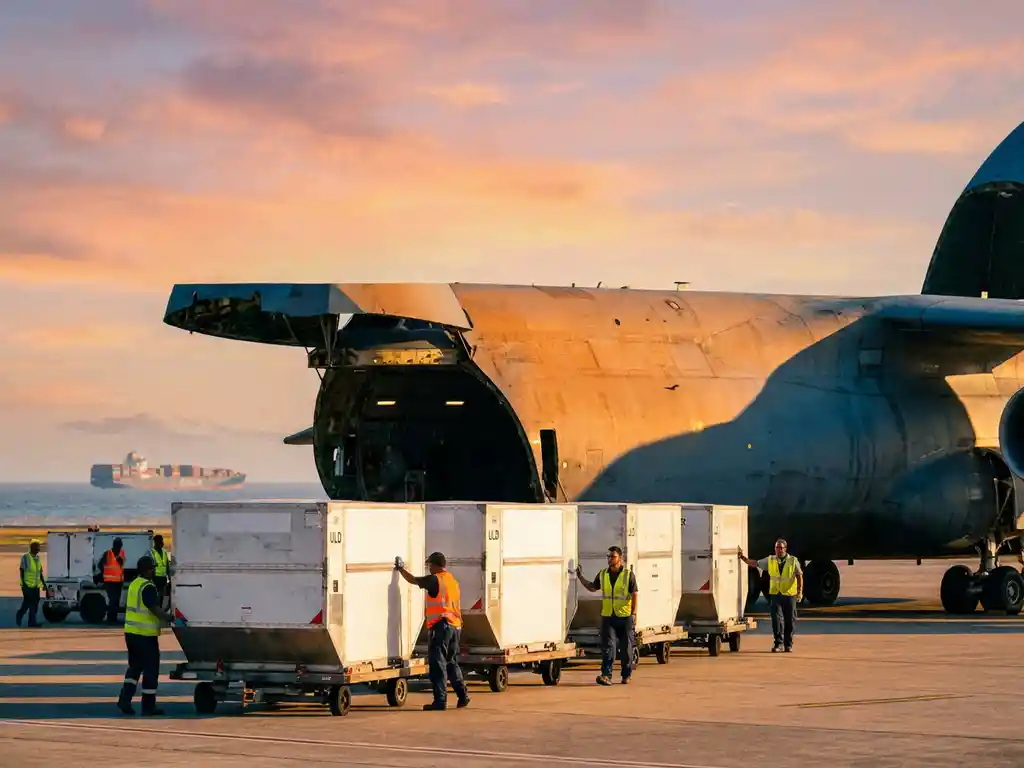
For B2B shipments from Europe to Africa, air freight is the faster option, typically delivering cargo in 3 to 7 days, while sea freight takes 2 to 6 weeks depending on the destination. The right choice depends on your cargo type, urgency, volume, and total landed cost. The sections below break down each factor so you can make an informed decision for your next shipment.
How long does shipping to Africa take by air versus sea?
Air freight from Europe to major African destinations such as Lagos, Accra, Nairobi, or Dar es Salaam typically takes 3 to 7 business days from departure to arrival at the destination airport. Sea freight on the same routes takes considerably longer, ranging from 14 to 45 days depending on the port, routing, and transshipment requirements.
Transit times for sea freight vary significantly by destination. West African ports like Lagos (Apapa) and Tema in Ghana are generally faster to reach from European ports than East African destinations such as Mombasa or Dar es Salaam, which often require routing around the Cape of Good Hope or via Suez. Landlocked destinations like Uganda or Rwanda add further transit time on top of the sea leg, as cargo must move overland from the nearest port after arrival.
Air freight transit times are more predictable. Direct or single-stop connections to hub airports in Nairobi, Lagos, Accra, and Dar es Salaam are well established, and schedules are consistent. Customs clearance at the destination is the main variable that affects final delivery time regardless of the mode used.
What does it cost to ship cargo to Africa by air or sea?
Air freight to Africa costs significantly more per kilogram than sea freight. As a general rule, air freight rates are 4 to 10 times higher per unit of weight than sea freight rates on the same corridor. However, total landed cost comparisons are more nuanced than the headline rate alone.
Sea freight is priced primarily by volume (CBM) for LCL (less-than-container-load) shipments or by container size for FCL (full-container-load). Air freight is charged by actual weight or volumetric weight, whichever is greater. For dense, heavy cargo, air freight becomes disproportionately expensive. For lightweight, high-value goods, the cost premium over sea freight may be acceptable when weighed against speed and reduced insurance exposure.
When calculating total cost, businesses should factor in more than the freight rate itself. Longer sea transit times mean higher inventory holding costs and tied-up working capital. Perishable or time-sensitive goods may lose value or become unsaleable if delayed. Packaging requirements also differ: sea freight typically requires more robust crating and protection against moisture and long transit conditions, which adds cost.
For shipments to Africa on a DDP (Delivered Duty Paid) basis, duties and taxes are included in the total cost regardless of mode. Understanding the full duty liability at destination is essential before comparing air and sea rates in isolation.
What types of cargo are best suited for air freight to Africa?
Air freight to Africa is best suited for goods where speed, reliability, or value outweighs the higher transport cost. The most common cargo categories shipped by air on the Europe-to-Africa corridor include:
- High-value goods: Electronics, industrial components, precision instruments, and spare parts where the cost of downtime or delay exceeds the air freight premium.
- Perishables: Pharmaceuticals, medical supplies, and temperature-sensitive products that cannot tolerate 4 to 6 weeks of sea transit.
- Urgent shipments: Production-critical spare parts, replacement equipment, or time-bound project cargo where a delayed delivery has direct operational or contractual consequences.
- Low-volume, high-density cargo: Small but heavy consignments where the per-unit air freight cost remains manageable relative to the total shipment value.
- Goods subject to import deadlines: Cargo tied to project timelines, tenders, or seasonal demand windows where late arrival means lost business.
Certain dangerous goods categories are also transported by air under IATA regulations, provided they are correctly classified, declared, and packaged. Class 7 (radioactive materials) is excluded entirely. All other regulated categories require proper documentation and carrier acceptance before booking.
When does sea freight make more sense for African shipments?
Sea freight is the more practical choice when shipment volume is large, delivery timelines are flexible, and cargo value per kilogram is relatively low. For businesses shipping full or partial containers of goods such as machinery, construction materials, consumer goods, or raw materials to West or East Africa, sea freight is the economically rational option.
FCL (full container load) shipments offer the best cost efficiency for large volumes and give the shipper full control over the container from loading to arrival. LCL (less-than-container-load) consolidation is suitable for smaller volumes that do not justify a full container but where speed is not critical.
Sea freight also makes sense when the nature of the cargo makes air transport impractical. Oversized machinery, vehicles, heavy industrial equipment, and bulk commodities cannot be shipped by air regardless of urgency. For these cargo types, sea freight is the only viable option, and planning lead times accordingly is part of standard logistics practice.
For recurring, predictable shipments with stable demand, sea freight allows businesses to plan supply chains around fixed sailing schedules, reducing per-unit logistics costs over time. Combined with proper inventory planning at the destination, sea freight can be entirely sufficient even for goods that might otherwise seem time-sensitive.
What are the main risks and challenges for each shipping mode?
Risks in air freight to Africa
The primary risk in air freight is capacity. Belly freight space on commercial routes to Africa can be limited, particularly on less-served destinations. Rates can spike during peak periods, and cargo may be rolled (bumped to a later flight) when space is overbooked. Proper booking lead time and working with an experienced freight forwarder reduce this risk significantly.
Customs clearance at African airports is another variable. Delays in documentation, incorrect tariff classifications, or missing import licenses can hold cargo at the airport after it has landed, negating part of the speed advantage. Ensuring complete and accurate documentation before departure is essential.
Risks in sea freight to Africa
Sea freight carries a higher risk of cargo damage from moisture, condensation, and rough handling over long transit periods. Container integrity, proper packing, and appropriate dunnage are important safeguards. Port congestion at major African ports, particularly Lagos Apapa, is a well-documented challenge that can add days or weeks to effective transit time beyond the published sailing schedule.
Documentation requirements for sea freight are extensive. Bills of lading, certificates of origin, packing lists, and destination-specific import documentation must all be in order. Errors or missing documents can result in cargo being held at port, with demurrage charges accumulating quickly.
How do you decide between air and sea freight for a specific shipment?
The decision between air and sea freight for a shipment to Africa comes down to four practical criteria: urgency, cargo value, shipment volume, and total cost. Evaluating these four factors against each other will point to the right mode in most cases.
Start with urgency. If the cargo must arrive within 2 weeks, air freight is the only realistic option. If 4 to 6 weeks is acceptable, sea freight becomes viable. Next, consider cargo value relative to weight. High-value, low-weight goods absorb the air freight premium more easily than heavy, low-value commodities.
Volume is the third factor. A single pallet or a few hundred kilograms is well suited to air freight. Multiple pallets or cargo filling more than 3 to 5 CBM starts to tip the balance toward sea freight on cost grounds. Finally, calculate total landed cost, not just the freight rate. Include duties, insurance, packaging, inventory carrying costs, and any penalties for late delivery at destination.
For shipments to destinations like Kenya, Tanzania, or Nigeria where both modes are regularly available, the decision is genuinely case-by-case. For more remote or landlocked destinations, the complexity of last-mile delivery after arrival should also factor into the mode decision, as it affects both cost and transit time for either option. Freight services to Africa that include customs handling and door delivery simplify this calculation considerably.
How EAF supports your air and sea freight decisions to Africa
We handle export shipments from Europe to Africa across both modes, with a primary focus on air freight. Our team assesses each shipment individually and recommends the most practical routing based on your cargo, timeline, and destination. What we bring to every shipment:
- DDP delivery (Delivered Duty Paid): We manage customs clearance, import duties, and last-mile delivery at destination. Your buyer receives the goods at their door without handling any customs formalities.
- Established routes to West and East Africa: Regular shipments to Nigeria, Ghana, Kenya, Tanzania, Uganda, and Rwanda mean we know the regulatory requirements, port conditions, and reliable local partners at each destination.
- IATA accreditation: We are an accredited IATA agent, which means we book air cargo directly with carriers and maintain the compliance standards required for regulated shipments.
- Documentation and customs expertise: We prepare and review all export and import documentation to reduce the risk of delays at origin or destination.
- Transparent cost comparison: We give you a clear picture of total landed cost for both air and sea options so you can make an informed decision for each shipment.
If you are planning a shipment from Europe to Africa and want a direct assessment of the best option for your cargo, contact us for a quote.
Ähnliche Artikel
- What should you consider for customs clearance for air freight to Ghana?
- What Causes Air Freight Delays and How Can You Avoid Them?
- How Do You Label and Mark Cargo for Export by Air?
- What Happens to Your Cargo Between Pickup and the Airport?
- What Documents Do You Need for Air Freight Export to Africa?
Dieser Inhalt wurde mithilfe von KI erstellt und kann Fehler enthalten.