
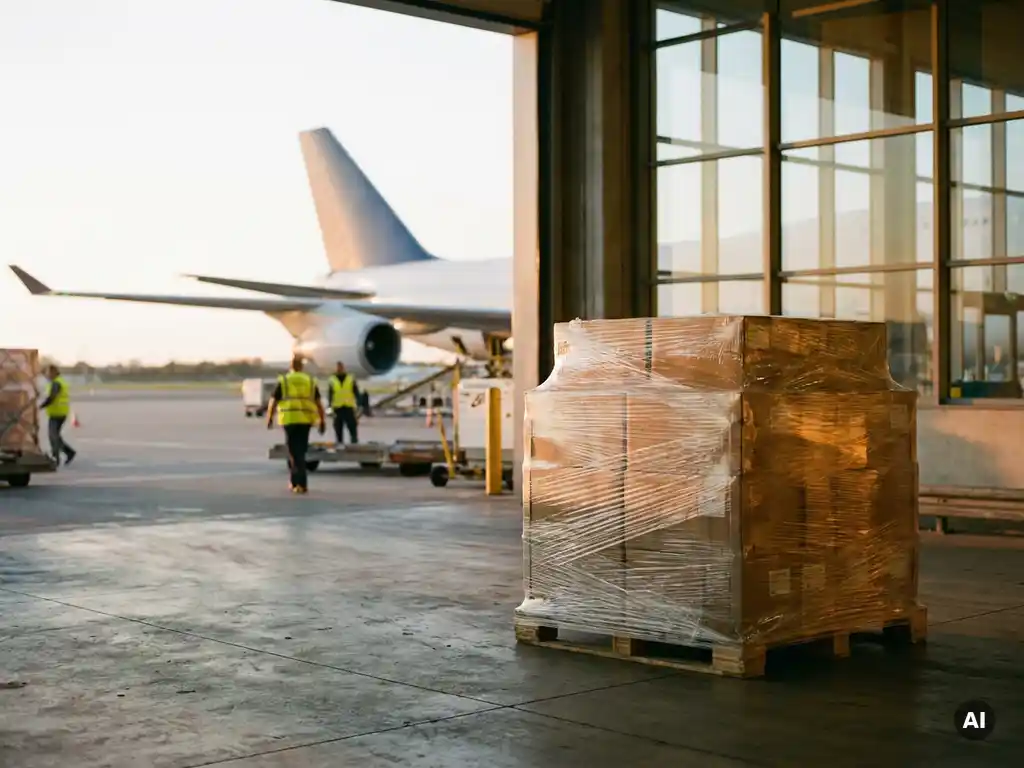
Yes, businesses shipping goods from Europe to Africa can meaningfully reduce air freight costs by consolidating cargo, choosing smart routing, timing shipments strategically, and working with a specialist freight forwarder who understands African markets. The single biggest lever is rarely the airline rate itself – it is the combination of shipment preparation, documentation accuracy, and routing decisions that determines total landed cost. The sections below address the most common cost drivers and practical ways to control them.
What factors drive up air freight costs to Africa?
Air freight costs to Africa are driven by a combination of weight and volume charges, fuel surcharges, security fees, destination handling costs, and customs-related delays. Unlike mature trade lanes within Europe or to North America, many African routes involve limited direct capacity, which pushes base rates higher and makes surcharges less predictable.
Several structural factors make Africa-bound air cargo more expensive than comparable shipments to other regions:
- Limited direct capacity: Few airlines operate direct freighter services to secondary African hubs, meaning cargo often transits through major connection points, adding cost and transit time.
- Chargeable weight calculation: Air freight is billed on actual weight or volumetric weight, whichever is higher. Bulky, lightweight goods can carry a significant surcharge.
- Fuel and security surcharges: These vary by airline and can fluctuate week to week, making budgeting difficult without a forwarder who monitors them closely.
- Destination handling and storage: Some African airports have limited handling infrastructure, which increases ground handling fees and the risk of storage charges if documentation is not in order on arrival.
- Customs and compliance costs: Incorrect or incomplete documentation leads to delays, which generate demurrage and storage fees that quickly exceed the original freight cost.
Understanding these factors is the first step toward controlling them. Most cost overruns on air cargo to Africa are not caused by the airline rate – they are caused by avoidable delays and poor shipment preparation.
How does cargo consolidation lower air freight rates?
Cargo consolidation reduces air freight rates by grouping smaller shipments from multiple exporters into a single consignment, allowing each shipper to access bulk pricing that would otherwise only be available for full charter loads. For businesses that do not move full freighter loads regularly, consolidation is one of the most effective tools for cutting per-kilogram costs.
When a freight forwarder consolidates cargo, they negotiate block space agreements or group rates with airlines based on consistent, predictable volume. Individual shippers benefit from these rates without needing to fill an entire aircraft themselves. This is particularly relevant on routes to destinations like Lagos, Accra, Nairobi, or Dar es Salaam, where direct freighter capacity is limited and spot rates can spike sharply.
Consolidation also reduces the administrative burden per shipment. A single master airway bill covers the consolidated consignment, while each shipper receives a house airway bill. This structure is well established and accepted by customs authorities across West and East Africa.
Which African routing options offer the best value?
The best-value routing for air freight to Africa depends on the destination, the urgency of the shipment, and the available airline capacity in a given week. Direct or near-direct routings to major hubs like Lagos (LOS), Accra (ACC), Nairobi (NBO), or Dar es Salaam (DAR) typically offer the best balance of cost, transit time, and reliability.
Routing decisions affect cost in several ways. A one-stop connection through a well-served hub such as Addis Ababa, Doha, or Amsterdam can access better rates than a more obscure connection with limited competition. However, additional transit points also introduce handling fees and the risk of delays, which can offset the savings on the base rate.
For shipments to East African destinations like Kenya, Tanzania, Uganda, or Rwanda, Nairobi is frequently the most efficient entry point, with onward connections well established. For West Africa, Lagos and Accra are the primary gateways, and routing through them rather than smaller secondary airports generally reduces total cost and minimises customs complexity.
The key principle is to match routing to the actual infrastructure at the destination. Saving on the Europe-to-hub leg but arriving at an airport with limited handling capacity can result in storage charges that eliminate any savings made on the inbound rate.
Does shipment timing affect air freight prices to Africa?
Yes, shipment timing has a direct impact on air freight rates to Africa. Rates fluctuate based on seasonal demand, capacity availability, and local market conditions at the destination. Booking well in advance and avoiding peak periods can produce meaningful savings on the same route.
Peak periods that typically drive up air freight costs include the pre-Christmas period, major Islamic holidays such as Ramadan and Eid, and local trade fair or agricultural seasons in key markets. During these windows, available capacity tightens and airlines raise spot rates accordingly.
Mid-week bookings often carry lower surcharges than Monday or Friday departures, which tend to attract premium pricing due to business demand. Businesses that can plan shipments two to three weeks ahead, rather than booking at short notice, are consistently better positioned to negotiate or access consolidated rates.
Flexibility on departure date, even by a few days, can also allow a forwarder to slot cargo into an existing consolidation rather than booking at a higher spot rate, which is another reason why advance planning reduces overall air freight costs.
What role does a freight forwarder play in reducing air cargo costs?
A specialist freight forwarder reduces air cargo costs by providing access to negotiated airline rates, managing documentation accurately to prevent costly delays, and advising on routing, consolidation, and timing. For shipments to Africa specifically, local knowledge and established relationships at the destination are as important as the inbound rate.
Beyond rate access, a forwarder with genuine Africa expertise adds value in several concrete ways:
- Documentation compliance: Errors in commercial invoices, packing lists, or certificates of origin are a leading cause of customs delays in Africa. A forwarder who knows the specific requirements for Nigeria, Ghana, Kenya, or Tanzania prevents these delays before they occur.
- DDP (Delivered Duty Paid) services: A forwarder offering Delivered Duty Paid delivery handles import duties, customs clearance, and last-mile delivery on behalf of the shipper. This removes unpredictable cost exposure for the exporter and simplifies the process for the receiving business.
- Consolidated shipments: Access to regular consolidations means smaller consignments travel at group rates rather than expensive spot prices.
- Local network: Established relationships with handling agents, customs brokers, and ground operators at African airports reduce the risk of storage charges and handling delays.
For B2B exporters without a customs and logistics team of their own, a freight forwarding specialist effectively acts as an extension of the export department.
Are there hidden charges to watch for in Africa-bound air freight quotes?
Yes, Africa-bound air freight quotes frequently exclude charges that become visible only after the shipment is booked or has arrived. The most common hidden costs include destination handling fees, customs examination fees, storage charges, and fuel or security surcharges that are applied at the time of booking rather than at the quoted rate.
When reviewing a quote for air freight to Africa, businesses should ask specifically about the following:
- Destination handling charges (DHC): These are charged by the airline or handling agent at the African airport and are often not included in the origin-based quote.
- Customs examination fees: If cargo is selected for physical examination by customs, additional fees apply. These vary by country and cannot always be predicted, but a forwarder with local experience can reduce the likelihood through accurate documentation.
- Storage and demurrage: If cargo is not cleared promptly on arrival, storage fees accumulate quickly. This is particularly relevant at busy airports in Lagos or Nairobi.
- Fuel and security surcharges: These are often quoted separately and can change between the time of quoting and the time of booking.
- Import duties and taxes: Unless the shipment moves on DDP terms, these costs fall to the consignee. Under DDP arrangements, they are included in the total price agreed at origin, providing full cost certainty.
The most reliable way to avoid surprises is to request an all-in quote that specifies what is and is not included, and to work with a forwarder who is transparent about destination-side charges.
How EAF helps you reduce air freight costs when shipping to Africa
We have been organising air freight from Europe to Africa for over 30 years, with a focus on West and East African markets including Nigeria, Ghana, Kenya, and Tanzania. Our approach is built around giving businesses full cost visibility and handling the parts of the process that typically generate unexpected charges.
Working with us means:
- Access to consolidated shipments on regular departures to key African destinations, giving smaller consignments access to group rates
- DDP (Delivered Duty Paid) delivery as a standard option, covering customs clearance, import duties, and last-mile delivery so your total cost is agreed upfront
- Documentation support to ensure compliance with destination country requirements and prevent costly customs delays
- Transparent, all-in quotes that include origin charges, airline rates, and destination handling so there are no surprises on arrival
- A local partner network at African airports and business centres, built on personal relationships developed over decades
If you are looking to reduce your air freight costs on shipments to Africa, contact us directly for a quote or to discuss your specific requirements. We will provide a straightforward assessment of your options and what a realistic all-in cost looks like for your destination.
Ähnliche Artikel
- What Is a Certificate of Origin and When Do You Need One?
- When is consolidated air freight to Nigeria worthwhile?
- What's Included in an Air Freight Quote to Africa?
- What Happens to Your Cargo Between Pickup and the Airport?
- Air Freight vs. Sea Freight: Which Is Right for Shipping to Africa?
Dieser Inhalt wurde mithilfe von KI erstellt und kann Fehler enthalten.