
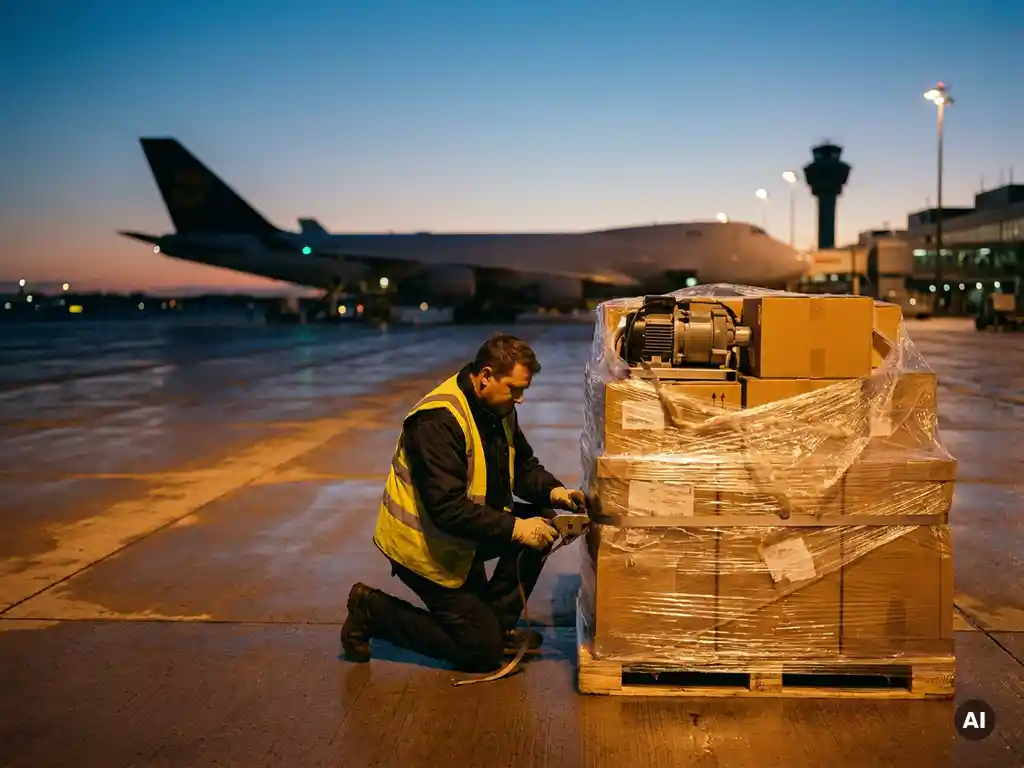
To choose an air freight forwarder for shipping to Africa, prioritize Africa-specific operational experience, verifiable network coverage across your target destinations, and the ability to handle customs clearance and last-mile delivery end-to-end. General freight expertise is not enough. Africa’s regulatory environments, port procedures, and inland logistics vary significantly by country, and a forwarder without hands-on regional knowledge will cost you time and money. The questions below break down exactly what to look for and what to avoid.
What criteria should you use to evaluate a freight forwarder for Africa?
When evaluating an air freight forwarder for Africa, assess four core areas: regional expertise, documentation capability, network depth, and service scope. A forwarder should be able to handle the full shipment cycle from origin in Europe to final delivery at the African destination, including customs clearance and local distribution. Businesses with a customs number need a partner who understands both sides of the transaction.
- Regional track record: How many years has the forwarder been actively shipping to your specific African destination? Nigeria, Ghana, Kenya, and Tanzania each have distinct customs regimes.
- End-to-end capability: Can the forwarder offer DDP (Delivered Duty Paid) service? This means they take full responsibility for import duties, customs clearance, and delivery to the consignee’s door.
- Transparency: Are quotes itemized and complete? Hidden surcharges at destination are a common problem with forwarders who lack local infrastructure.
- Communication: Do you have a named contact who knows your account? Responsive, direct communication matters when shipments are time-sensitive.
No single criterion is sufficient on its own. The strongest indicator is a forwarder who can give you specific, concrete answers about procedures at your destination rather than generic reassurances.
Why does Africa-specific experience matter more than general freight expertise?
Africa-specific experience matters more than general freight expertise because regulatory frameworks, customs procedures, and infrastructure conditions across African countries are highly variable and change frequently. A forwarder who ships globally but lacks dedicated Africa operations will rely on third-party agents at destination, adding cost, delay, and communication gaps that experienced Africa specialists avoid.
Shipping to Lagos operates under completely different rules than shipping to Nairobi or Accra. Nigeria’s customs authority, for example, has specific pre-shipment inspection requirements and documentation standards that differ from Kenya’s import procedures. A forwarder without established local contacts will struggle to resolve holds, discrepancies, or duty disputes in a timely manner.
Beyond customs, last-mile delivery in many African cities requires local knowledge of road conditions, delivery windows, and recipient verification. Forwarders with established Africa networks manage these variables through on-the-ground partners rather than remote coordination. This directly affects whether your cargo arrives on time and in full.
What’s the difference between a freight forwarder and a carrier for Africa shipments?
A freight forwarder organizes the transportation of your cargo and manages documentation, customs, and logistics coordination. A carrier physically moves the cargo, typically an airline in the case of air freight. For Africa shipments, you almost always work with a forwarder, not directly with a carrier, because the forwarder handles the complexity that airlines do not.
Airlines accept cargo and issue airway bills, but they do not clear customs at destination, arrange last-mile delivery, or manage documentation compliance for specific African import regulations. A freight forwarder acts as the single point of contact for all of these steps, booking capacity with the appropriate airlines while managing the full logistics chain around the flight itself.
For businesses shipping from Europe to Africa, working directly with a carrier means taking on all coordination, documentation, and destination logistics yourself. A qualified forwarder absorbs that operational burden, which is particularly valuable on routes where local customs expertise is essential to avoiding delays and penalties.
Which documents and certifications should a reliable Africa freight forwarder have?
A reliable air cargo forwarder for Africa should hold IATA accreditation, which authorizes them to issue airway bills and work directly with airlines. Beyond IATA, look for ISO 9001 certification as evidence of documented, audited quality management processes. Membership in relevant trade bodies adds further accountability.
Specific certifications and memberships to look for include:
- IATA accreditation: Required to issue airway bills independently. Non-accredited forwarders must work through intermediaries, which adds cost and reduces control.
- ISO 9001 certification: Demonstrates that the forwarder operates under a formal quality management system with regular external audits.
- Chamber of commerce membership: Indicates formal business standing and accountability within the local business community.
- Bilateral trade body membership: Organizations such as the German-Nigerian Chamber of Commerce (AHK) or the German Business Association Kenya signal active engagement with the specific trade corridor.
These credentials are not guarantees of performance, but their absence is a warning sign. Any forwarder offering air freight services to Africa without IATA accreditation is operating through another party, which reduces your visibility and control over the shipment.
How do you assess a forwarder’s actual network coverage across Africa?
To assess real network coverage, ask the forwarder directly which African destinations they serve regularly, whether they have their own office or a joint-venture presence at destination, and which local partners they use for customs clearance and last-mile delivery. Vague answers indicate a thin network built on ad-hoc agent relationships rather than established infrastructure.
Key questions to ask a potential logistics partner for Africa:
- Do you have a permanent presence or joint-venture partner in the destination country?
- Who handles customs clearance at destination, and how long have you worked with them?
- Can you deliver DDP to the consignee’s address in this specific city?
- How do you handle shipment delays or customs holds at this destination?
A forwarder with genuine coverage will answer these questions with specifics: named partners, typical clearance timelines, and clear escalation procedures. A forwarder relying on general agent networks will give approximate or evasive answers. For destinations like Tanzania, Uganda, Rwanda, or Mozambique, which are often served as secondary stops from a regional hub, ask specifically how the onward leg is managed and by whom.
You can also review the range of services offered on a forwarder’s website as a starting point, but always follow up with direct questions to verify that the listed coverage reflects active operations rather than theoretical capability.
What red flags should you watch for when selecting an air freight forwarder?
The most significant red flags when selecting an air freight forwarder for Africa are: no IATA accreditation, inability to offer DDP terms, vague answers about destination handling, and no verifiable presence or named partner at the African destination. Any of these individually warrants caution; more than one is a clear signal to look elsewhere.
Additional warning signs include:
- All-inclusive quotes with no itemization: Legitimate forwarders can break down origin charges, freight costs, destination handling, and customs fees. A single lump-sum quote makes it impossible to understand what you are paying for.
- No reference to customs clearance: If a forwarder quotes air freight to Nigeria or Kenya without mentioning import documentation requirements, they are either unaware of them or expecting you to handle them.
- Guaranteed transit times to African destinations without qualification: Customs clearance timelines in many African countries depend on documentation accuracy, inspection queues, and regulatory factors outside any forwarder’s direct control. Unrealistic guarantees are a credibility issue.
- No industry memberships or certifications: A forwarder operating without IATA accreditation or ISO certification has no external accountability framework.
- Poor responsiveness at inquiry stage: If communication is slow or imprecise before you become a client, it will not improve once your cargo is in transit.
Trust your due diligence. Switching forwarders mid-relationship is disruptive, so investing time in proper evaluation before the first shipment is always worthwhile.
How EAF supports your air freight shipments to Africa
We have been shipping cargo from Europe to Africa for over 30 years, with a focus on air freight to West and East Africa including Nigeria, Ghana, Kenya, and Tanzania. Our approach is built around taking full ownership of the shipment from origin to destination, so that our clients do not have to manage the complexity themselves.
What we offer businesses shipping to Africa:
- DDP delivery: We handle import duties, customs clearance, and last-mile delivery to the consignee’s address. No surprises at destination for your buyer or recipient.
- IATA accreditation and ISO 9001 certification: We issue our own airway bills and operate under audited quality management processes.
- Own-office and joint-venture presence: We have established partners in Lagos and Accra, and a strong operational network across East Africa coordinated from Nairobi.
- Direct account management: You work with a named contact who knows your trade lane and your cargo, not a call center.
- Cross-trade capability: For businesses sourcing goods outside Europe, we can coordinate shipments to Africa from other origins as a secondary service.
If you are evaluating air freight forwarders for a specific African destination, get in touch with us directly. We will give you a clear, itemized answer on what your shipment requires and what it will cost.
Ähnliche Artikel
- Air Freight to Kenya: How Shipments Reach Nairobi
- How Does Air Freight from Europe to Nigeria Work?
- What Goods Can and Can't Be Shipped to Africa by Air?
- How Long Does Air Freight from Europe to Africa Take?
- Air Freight vs. Sea Freight: Which Is Right for Shipping to Africa?
Dieser Inhalt wurde mithilfe von KI erstellt und kann Fehler enthalten.