
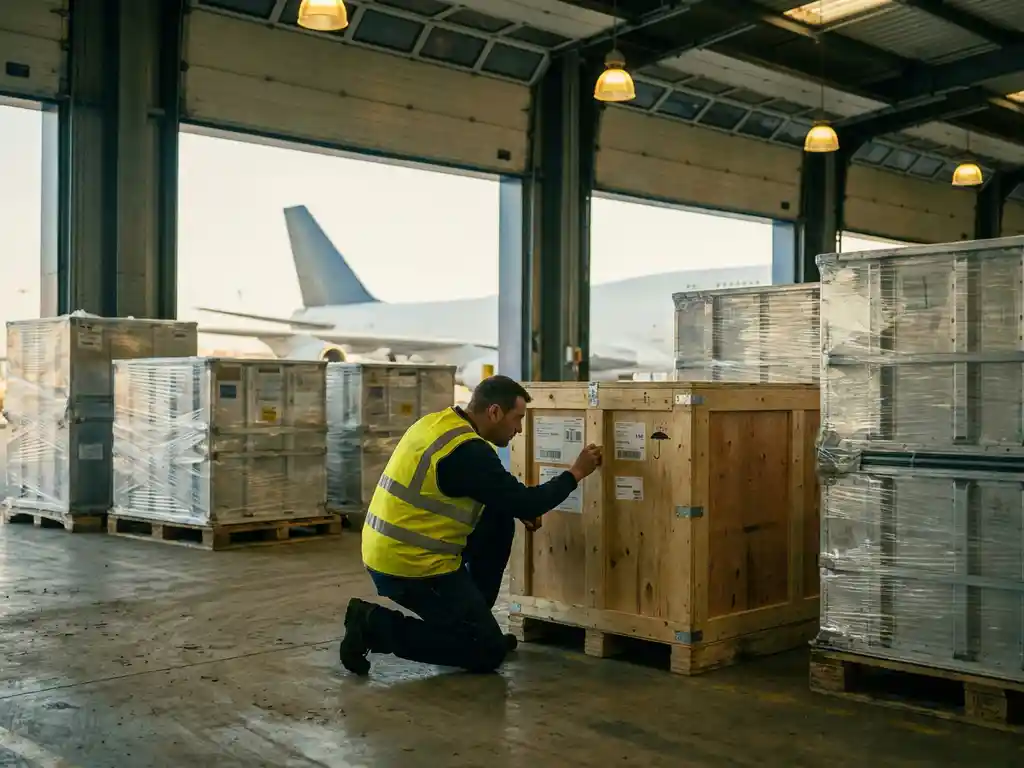
Most standard commercial goods can be shipped to Africa by air, including electronics, machinery, pharmaceuticals, textiles, and consumer products. However, certain categories are restricted and require permits or documentation, while others are outright prohibited under aviation safety regulations or destination country law. The rules vary by country and cargo type, and getting them wrong can result in seizure, fines, or flight delays. This article works through the key questions businesses face when shipping goods from Europe to Africa by air.
Which categories of goods are commonly shipped to Africa by air?
The most commonly air-freighted goods from Europe to Africa include electronics and IT equipment, industrial machinery and spare parts, pharmaceuticals and medical supplies, textiles and garments, automotive parts, and fast-moving consumer goods. These categories are well-suited to air freight because of their high value, time sensitivity, or perishable nature.
Air cargo to destinations like Nigeria, Ghana, Kenya, and Tanzania tends to reflect trade patterns between Europe and Africa. Electronics and telecommunications equipment move frequently into West Africa, while pharmaceuticals and medical devices are a significant category in East African markets. Industrial spare parts are another consistent category, particularly for the oil and gas sector in Nigeria and the agricultural sector across East Africa.
Perishable goods such as fresh produce, cut flowers, and certain food products also move by air, though these require specific temperature controls and documentation. For businesses shipping high-value or time-critical goods, air freight to Africa remains the most reliable mode of transport.
What goods are restricted on air freight to Africa?
Restricted goods on air freight to Africa are items that can be shipped but require additional permits, licenses, or documentation before they can be cleared. These are not automatically prohibited, but they cannot move without prior authorization. Common restricted categories include pharmaceuticals, chemicals, agricultural products, telecommunications equipment, and certain food items.
Restrictions typically fall into several overlapping categories:
- Pharmaceuticals and medical devices: Most African countries require import permits issued by the national drug regulatory authority. Without these, shipments will be held at customs.
- Chemicals and industrial substances: Depending on their classification, these may require safety data sheets, hazardous goods declarations, and specific packaging under IATA Dangerous Goods Regulations (DGR).
- Telecommunications and radio equipment: Many countries, including Nigeria and Kenya, require type approval from the national communications regulator before equipment can be imported commercially.
- Agricultural inputs: Seeds, fertilizers, and pesticides often require phytosanitary certificates and import permits from the destination country’s agricultural authority.
- Food and beverages: Commercial food shipments generally require health certificates, certificates of origin, and sometimes pre-shipment inspection.
The key distinction is that restricted goods are manageable with the right documentation. Businesses that plan ahead and work with an experienced freight forwarder can move these goods without significant delays.
What goods are completely prohibited from air shipment to Africa?
Certain goods are prohibited from air shipment entirely, either under international aviation regulations or the import laws of specific African countries. These include items that pose an unacceptable safety risk to aircraft or goods that the destination country bans from import outright.
Under IATA Dangerous Goods Regulations, the following are prohibited on all commercial flights regardless of destination:
- Radioactive materials (Class 7) under standard commercial air freight conditions
- Explosive substances and devices not meeting strict exemptions
- Certain flammable liquids and gases that exceed permitted thresholds
- Infectious substances that do not meet Category A or B packaging requirements
Beyond aviation safety rules, destination countries apply their own import prohibitions. Nigeria, for example, maintains a list of goods banned from importation that includes certain used goods, specific food products, and items deemed to threaten local industries. Kenya and Tanzania similarly restrict or ban certain second-hand goods, used tyres, and some agricultural products to protect domestic markets or public health.
It is worth noting that the prohibited goods list is distinct from the restricted goods list. Prohibited means no entry under any circumstances. Restricted means entry is possible with the right authorization.
Do prohibited and restricted goods differ by African country?
Yes, prohibited and restricted goods vary significantly by African country. There is no single harmonized import framework across Africa, which means a shipment that moves freely into Ghana may face restrictions in Nigeria, and vice versa. Each country sets its own customs regulations, import bans, and licensing requirements.
West Africa and East Africa differ in several practical ways. Nigeria’s Federal Government publishes an official list of prohibited imports, which is updated periodically and covers a wide range of goods. Ghana’s regulations are generally more open but still require permits for pharmaceuticals, chemicals, and certain electronics. In East Africa, Kenya, Tanzania, Uganda, and Rwanda operate within the East African Community (EAC) framework, which provides some degree of harmonization, but national-level import restrictions still apply in each country.
For businesses shipping commercially from Europe, this means the destination country must always be factored into pre-shipment planning. What applies to Lagos does not automatically apply to Nairobi. Checking current import regulations for each specific destination before booking air cargo is not optional, it is essential.
What happens if prohibited goods are declared incorrectly on air freight?
Incorrectly declaring prohibited or restricted goods on an air freight shipment carries serious consequences. At the airport of departure, carriers and handling agents are required to check cargo documentation against the goods being shipped. If a discrepancy is found, the shipment will be held and may be refused for loading entirely.
If an incorrect declaration reaches the destination country, the consequences escalate:
- Customs seizure: Goods declared incorrectly can be seized by customs authorities without compensation to the shipper.
- Fines and penalties: The consignee or importer of record may face significant financial penalties under the destination country’s customs law.
- Delays and storage costs: Even if the goods are ultimately released, the time spent in customs holds generates storage and demurrage costs that can exceed the value of the goods themselves.
- Blacklisting: Repeated violations can result in a business being flagged by customs authorities, making future clearances slower and more scrutinized.
- Legal liability: In serious cases involving dangerous goods, legal action against the shipper or freight forwarder is possible.
The most common errors involve misdescribing dangerous goods, undervaluing goods to reduce duty liability, or failing to disclose that a shipment contains restricted items requiring permits. None of these are treated lightly by customs authorities in Nigeria, Kenya, Ghana, or Tanzania.
How can a freight forwarder help navigate air cargo restrictions to Africa?
An experienced freight forwarder with genuine Africa expertise can identify which restrictions apply to a specific shipment before it is booked, ensure documentation is complete and compliant, and manage the clearance process at the destination. This is particularly valuable for businesses that do not have in-house customs expertise for African markets.
A competent forwarder provides practical support across several areas:
- Classifying goods correctly under the Harmonized System (HS) to determine applicable duties and restrictions
- Advising on which import permits or licenses are required in the destination country
- Preparing and reviewing air waybills, commercial invoices, packing lists, and certificates of origin
- Coordinating dangerous goods declarations in line with IATA DGR where applicable
- Managing customs clearance and last-mile delivery at the destination
For businesses shipping on DDP (Delivered Duty Paid) terms, the forwarder takes on responsibility for duties, taxes, and final delivery. This removes the compliance burden from the buyer entirely and is particularly useful for businesses supplying subsidiaries, project sites, or commercial partners in Africa who do not have the capacity to manage customs clearance locally.
How EAF supports your air freight shipments to Africa
We have been moving goods from Europe to Africa by air for over 30 years, with active operations covering West and East Africa, including Nigeria, Ghana, Kenya, and Tanzania. Our team knows which goods require permits, which destinations apply additional import restrictions, and how to structure documentation to avoid delays at customs.
When you ship with us, we handle:
- Pre-shipment compliance checks to identify restrictions before booking
- Full documentation preparation, including dangerous goods declarations where required
- DDP (Delivered Duty Paid) shipments, including duty payment and last-mile delivery at destination
- Customs clearance coordination through our established partner network across Africa
- Direct communication throughout the shipment, from origin to delivery
We work exclusively with businesses, and our service is built around the practical needs of commercial exporters. If you are planning a shipment and are unsure whether your goods face restrictions at the destination, contact our team before you book. We will give you a direct answer based on the specific goods and destination country.
Ähnliche Artikel
- How Do You Ship High-Value Goods to Africa by Air?
- How Do You Ship Spare Parts to Africa by Air?
- What Are the Most Common Air Freight Export Mistakes?
- What Happens to Your Cargo Between Pickup and the Airport?
- Air Freight to Kenya: How Shipments Reach Nairobi
Dieser Inhalt wurde mithilfe von KI erstellt und kann Fehler enthalten.