
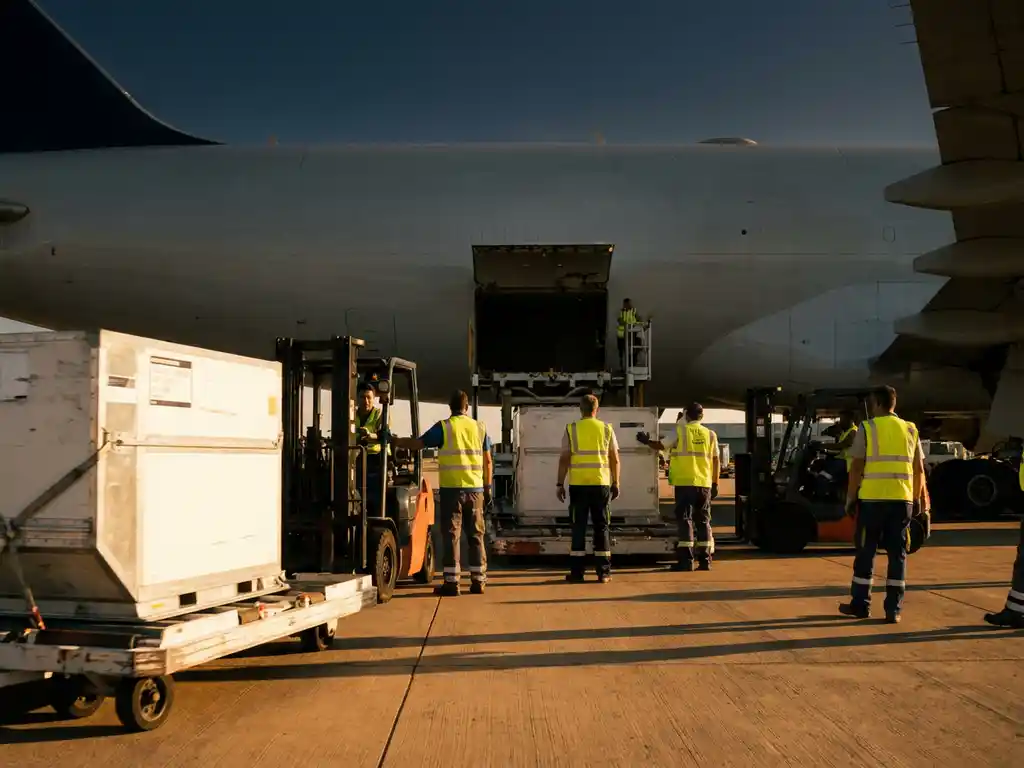
Air freight from Europe to Nigeria works by consolidating or booking cargo on scheduled airline routes to Lagos (Murtala Muhammed International Airport), clearing customs at the destination, and delivering goods to the consignee. For businesses, the process involves documentation, customs compliance, and coordination with a licensed freight forwarder. The sections below cover each stage in practical detail.
What documents are required for air freight shipments to Nigeria?
Air freight shipments to Nigeria require a specific set of documents before goods can clear customs. The core documents are the airway bill (AWB), commercial invoice, packing list, and a Form M — Nigeria’s mandatory import declaration, which must be obtained before shipment. Without a valid Form M, goods cannot legally enter Nigeria.
Beyond the Form M, most commercial shipments also require a Combined Certificate of Value and Origin (CCVO), which confirms the declared value and country of manufacture. Depending on the product category, additional permits may apply. Pharmaceuticals, food products, and chemicals each fall under the oversight of specific Nigerian regulatory agencies and require pre-shipment inspection certificates or product registration numbers.
Businesses shipping to Nigeria must hold a valid Tax Identification Number (TIN) and a customs import code. Private individuals cannot import commercial quantities of goods through standard freight channels. All valuations on the commercial invoice must be accurate — Nigerian Customs cross-checks declared values against published reference prices, and undervaluation is a common cause of delays.
How long does air freight from Europe to Nigeria take?
Air freight from Europe to Lagos typically takes between 3 and 7 business days from the point of collection to final delivery. Flight transit itself is 6 to 10 hours depending on the European origin, but total transit time includes cargo acceptance, flight connections, customs clearance at Lagos, and last-mile delivery. Clearance is often the variable that determines the final delivery window.
Shipments with complete, accurate documentation clear faster. Incomplete paperwork, missing permits, or valuation discrepancies can extend the customs process by several days. For time-critical cargo, pre-lodging customs documents before the flight arrives reduces clearance time significantly. Businesses with recurring shipments benefit from established relationships with clearing agents at the destination port.
How does customs clearance work at Lagos airport?
Customs clearance at Murtala Muhammed International Airport is handled through the Nigeria Customs Service (NCS) using the Nigeria Integrated Customs Information System (NICIS II). Once a shipment arrives, the freight forwarder or licensed clearing agent files an import declaration, pays applicable duties and levies, and obtains release of the cargo. Physical inspection is common and can be triggered by the customs risk assessment system.
Nigeria applies a tiered duty structure based on the Harmonized System (HS) code of the goods. Import duty rates vary widely by product category, and additional levies such as the CISS (Comprehensive Import Supervision Scheme) fee and VAT apply on top of the basic duty. Correct HS code classification is essential — misclassification leads to reassessment, fines, or cargo holds.
For businesses importing under DDP (Delivered Duty Paid) terms, the freight forwarder assumes responsibility for the full customs process, including duty payment, on behalf of the consignee. This simplifies the process for the importer considerably, as all costs and compliance obligations are handled before final delivery.
What are the costs involved in air freight to Nigeria?
The main cost components in air freight to Nigeria are the freight rate (charged per kilogram or per chargeable weight), origin charges, destination handling fees, customs duties, and delivery costs. The total landed cost is typically higher than the air freight rate alone, and businesses should budget for all components from the start.
- Freight rate: Priced per kilogram based on actual or volumetric weight, whichever is greater. Rates vary by airline, route, and market conditions.
- Origin charges: Collection, export customs clearance, and airport handling at the European departure point.
- Destination handling: Airport handling, storage, and clearance agent fees at Lagos.
- Import duties and levies: Based on CIF value (cost, insurance, freight) and the applicable HS code. These can represent a significant portion of the total cost for dutiable goods.
- Last-mile delivery: Transport from the airport to the consignee’s address within Nigeria.
Under DDP terms, all of the above are quoted as a single all-in price, which gives the importer full cost visibility before shipment. Under EXW or FOB terms, the importer carries more of the cost and compliance risk at destination.
What goods are restricted or prohibited for import into Nigeria?
Nigeria maintains an official list of prohibited and restricted imports. Prohibited goods cannot be imported under any circumstances, while restricted goods require specific licenses or permits before they can enter the country. Attempting to ship prohibited items results in seizure and may lead to legal consequences for the shipper.
Commonly prohibited items include used clothing (second-hand textiles), certain used vehicles over a defined age threshold, and a range of agricultural products subject to import bans. Firearms and ammunition are prohibited except under strict government authorization. Counterfeit goods and items that infringe intellectual property rights are also banned.
Restricted categories that require permits or pre-approvals include pharmaceuticals (regulated by NAFDAC), food products, chemicals, and telecommunications equipment. Dangerous goods accepted for air freight to Africa must comply with IATA regulations and be declared correctly — Class 7 (radioactive) materials are not transported. Businesses should verify the import status of their specific product before booking a shipment.
When should you choose air freight over sea freight for Nigeria?
Air freight is the right choice for Nigeria when speed, cargo value, or product sensitivity outweighs the cost difference compared to sea freight. For high-value goods, perishables, urgent spare parts, or time-sensitive commercial orders, the faster transit and reduced risk of damage or deterioration justify the higher rate per kilogram.
Sea freight to Nigeria typically takes 3 to 5 weeks from European ports, compared to the 3 to 7 business days for air. For low-value, high-volume, or non-urgent cargo, sea freight offers a significantly lower cost per kilogram and is the standard choice for full container loads. The decision usually comes down to the ratio of cargo value to weight and the urgency of delivery.
Practical scenarios where air freight makes sense for Nigeria-bound cargo include:
- Machinery spare parts needed to restart production
- Pharmaceutical products with shelf-life or regulatory constraints
- Electronics or high-value goods where transit risk is a concern
- Sample shipments or small commercial quantities ahead of a larger sea freight order
- Goods tied to a contractual delivery deadline
How EAF supports your air freight shipments to Nigeria
We have been handling air freight from Europe to Nigeria for over 30 years, with direct operational experience in Lagos and an established network of clearing agents and delivery partners on the ground. For businesses that need reliable, compliant cargo delivery to Nigeria, we offer:
- DDP shipments to Nigeria: We manage the full process from European collection to delivery at the Nigerian consignee’s door, including customs duties, clearance, and last-mile logistics.
- Documentation support: We guide exporters through Form M requirements, CCVO preparation, and product-specific permits to prevent clearance delays.
- Customs compliance: Our team handles HS code classification, duty calculation, and liaison with Nigerian Customs on your behalf.
- Flexible cargo solutions: Whether you are shipping a single pallet or a full aircraft unit load device, we consolidate or book dedicated space based on your volume and timeline.
We work exclusively with businesses that hold the required import credentials, ensuring every shipment meets Nigerian regulatory requirements from the outset. To discuss your next shipment to Nigeria, get in touch with our team directly.
Ähnliche Artikel
- How Do You Ship to Landlocked African Countries by Air?
- How Should You Package Goods for Air Freight to Africa?
- What Causes Air Freight Delays and How Can You Avoid Them?
- How Does Insurance Work for Air Freight Shipments to Africa?
- What Documents Do You Need for Air Freight Export to Africa?
Dieser Inhalt wurde mithilfe von KI erstellt und kann Fehler enthalten.