
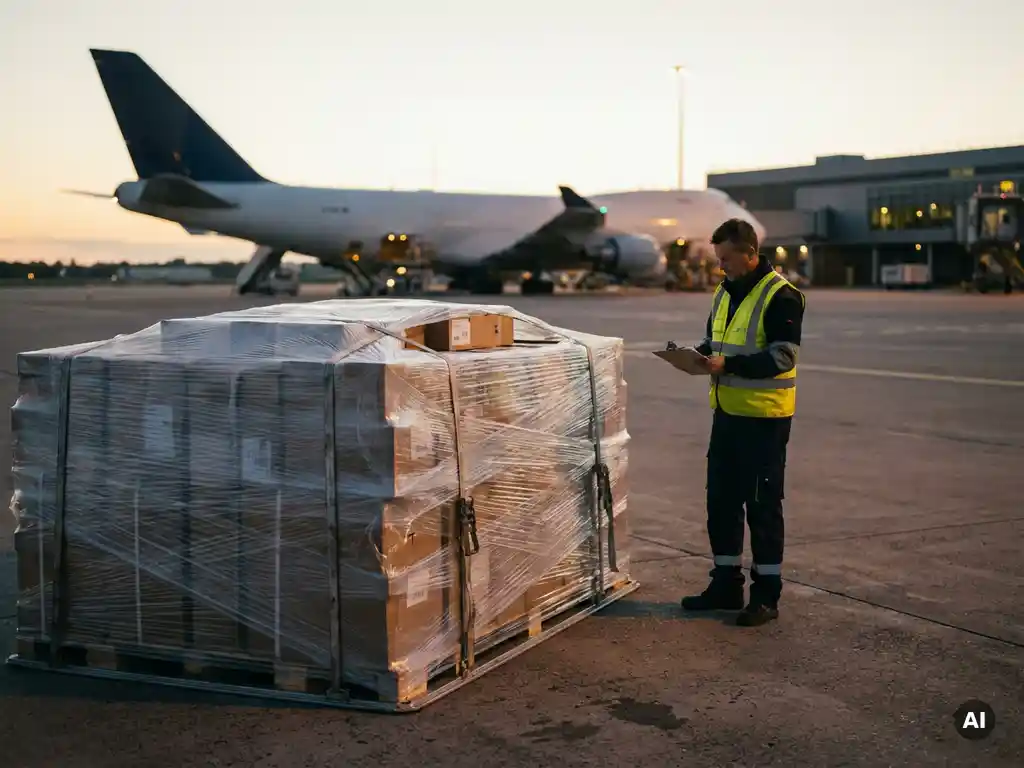
Air freight delays are most commonly caused by incomplete or incorrect documentation, customs clearance issues, capacity constraints, and adverse weather conditions. For businesses shipping goods from Europe to destinations in Africa, such as Nigeria, Ghana, Kenya, or Tanzania, these disruptions can translate directly into missed deadlines and increased costs. Understanding the root causes and knowing how to address them is the first step to more reliable air cargo shipping.
What are the most common causes of air freight delays?
The most common causes of air freight delays are documentation errors, customs clearance holds, insufficient airline capacity, weather disruptions, and security screening. Each of these factors can stall a shipment at origin, in transit, or at destination, sometimes by several days.
For businesses shipping from Europe to African markets, the risk is compounded by the complexity of destination country regulations. Airlines prioritize cargo based on available space, and shipments without complete documentation are routinely bumped. Security screening requirements, particularly for certain commodity types, can add processing time at European departure airports. Weather events such as fog, storms, or extreme heat can ground aircraft or force rerouting, affecting entire networks rather than individual shipments.
Capacity issues are especially common during peak periods, including the run-up to major holidays or during agricultural and industrial export seasons. Shippers who book late or without confirmed space allocations are most exposed to these disruptions.
How does customs clearance cause air freight delays?
Customs clearance causes air freight delays when declarations are incomplete, duties are unpaid, or authorities flag a shipment for physical inspection. In many African destination countries, customs processes involve multiple government agencies, and a hold at any point in that chain can extend clearance from hours to weeks.
At the destination end, common triggers for customs delays include mismatched commercial invoice values, incorrect harmonized system (HS) codes, missing import permits, and discrepancies between declared and actual cargo contents. In countries such as Nigeria and Kenya, customs authorities apply rigorous scanning and verification procedures, and shipments that cannot be quickly reconciled against their paperwork are held pending further review.
One effective way to reduce customs-related delays is to ship on DDP terms (Delivered Duty Paid). Under DDP, the freight forwarder manages all import duties, taxes, and customs formalities on behalf of the consignee. This removes the burden from the recipient and ensures that a specialist with local knowledge handles the clearance process, significantly reducing the likelihood of holds caused by inexperience or incomplete filings.
Why do air freight delays happen more on certain routes?
Air freight delays occur more frequently on certain routes because of limited direct flight options, hub congestion, stricter destination customs regimes, and fewer competing airlines. Routes from Europe to West and East Africa are particularly affected because many connections require at least one transit hub, multiplying the points at which a delay can occur.
Routes serving destinations such as Lagos, Accra, Nairobi, or Dar es Salaam often involve transiting through Middle Eastern or European hub airports. Any delay at the hub, whether due to capacity, ground handling issues, or aircraft changes, can cause a missed onward connection and a delay of 24 hours or more. Smaller destination airports may also have restricted operating hours or limited ground handling capacity, which narrows the window for successful delivery.
Political or regulatory changes in destination countries can also affect route reliability. Import restrictions, temporary suspensions of specific commodity types, or changes to airline operating rights can disrupt established routing at short notice. Working with a freight forwarder that has active relationships across African destinations provides an early warning advantage when route conditions change.
What documentation errors cause air cargo shipments to be held?
The documentation errors most likely to cause air cargo shipments to be held are incorrect or missing commercial invoices, inaccurate packing lists, wrong HS codes, absent certificates of origin, and missing import or export licenses. Any single error can trigger a hold at customs or prevent a shipment from being accepted at the airline’s cargo terminal.
For shipments moving from Europe to Africa, additional documents are frequently required depending on the commodity and destination country. These can include phytosanitary certificates for agricultural goods, conformity assessment certificates, pre-shipment inspection reports, and destination-specific import permits. Missing any of these documents is one of the most preventable causes of air freight delays.
Common errors to check before handing over cargo include:
- Shipper and consignee details that do not match the import license or customs registration
- Invoice values that differ from the actual transaction value or that omit freight and insurance costs where required
- HS codes that are outdated, incorrect, or inconsistently applied across invoice, packing list, and airway bill
- Country of origin declarations that are missing or do not meet the destination country’s rules of origin requirements
- Dangerous goods declarations that are incomplete or absent for regulated commodity types
Reviewing documents against a destination-specific checklist before booking is one of the simplest ways to avoid cargo being held at origin or destination.
How can shippers reduce the risk of air freight delays?
Shippers can reduce the risk of air freight delays by preparing complete and accurate documentation before booking, confirming space allocations early, using DDP shipping terms for African destinations, and working with a freight forwarder that has established local agent networks at the destination.
Practical steps that make a measurable difference include:
- Book with confirmed space, not just a quote. Unconfirmed bookings are the first to be offloaded when capacity is tight.
- Prepare all documents before cargo is ready. Waiting until the last moment to complete paperwork is the most common cause of avoidable delays.
- Use DDP terms for African destinations. Placing customs clearance responsibility with a specialist reduces the risk of holds caused by recipient-side errors.
- Verify HS codes and required permits in advance. Requirements change, and what was accepted last year may require additional documentation in 2026.
- Choose routings with fewer transit points. Every hub connection is an additional delay risk. Direct or single-stop routings are more reliable when available.
- Communicate cargo details accurately and completely. Partial or vague descriptions increase the likelihood of security screening or customs queries.
What should you do when an air freight shipment is already delayed?
When an air freight shipment is already delayed, the first step is to identify exactly where in the chain the hold has occurred, whether at origin, in transit, or at destination customs. Once the location and reason are confirmed, the appropriate action depends on the cause: a documentation issue requires immediate correction and resubmission, while a capacity or routing delay may require rebooking on an alternative flight or carrier.
Contact your freight forwarder as soon as a delay becomes apparent. An experienced forwarder with local contacts at the destination can often accelerate customs clearance, arrange alternative routing, or escalate with airline ground handlers more effectively than a shipper acting independently. Waiting to see whether a delay resolves itself typically makes the situation worse, particularly when perishable goods or time-sensitive business deliveries are involved.
Where a delay is caused by missing or incorrect documents, the fastest resolution is to provide corrected documents directly to the customs broker or local agent at the destination. In some cases, a formal amendment to the airway bill or commercial invoice may be required, which your freight forwarder can coordinate.
Keeping the consignee informed throughout a delay is also important. In many African markets, recipients are required to present documents or attend customs in person, and an unprepared consignee can extend a delay further.
How EAF helps you avoid air freight delays on Europe-to-Africa shipments
Avoiding air freight delays on routes from Europe to Africa requires more than good documentation. It requires a freight partner with direct experience of the customs regimes, airline networks, and local conditions at the destination. This is where we add concrete value for our business clients.
- DDP door-to-door delivery: We manage import duties, customs clearance, and last-mile delivery at the destination, removing the most common source of holds from the consignee’s hands.
- Documentation review: Before a shipment moves, we check that all required documents are complete and compliant for the specific destination country, whether that is Nigeria, Ghana, Kenya, Tanzania, or elsewhere in Africa.
- Established local agent network: Our long-standing partner relationships across African trading hubs mean that when a delay does occur, we have direct contacts who can act quickly on the ground.
- Route and capacity management: We secure confirmed space allocations and advise on the most reliable routing options for time-sensitive cargo.
- Transparent status communication: Our clients receive direct updates throughout the shipment, not automated notifications with no context.
If you are shipping goods from Europe to Africa and want to reduce the risk of disruption, contact us to discuss your requirements. We work exclusively with business clients and bring over 30 years of Africa-specific logistics experience to every shipment.
Ähnliche Artikel
- How Should You Package Goods for Air Freight to Africa?
- What Is Air Charter and When Does It Make Sense for Shipping to Africa?
- How Does Air Freight from Europe to South Africa Work?
- Air Freight to Kenya: How Shipments Reach Nairobi
- How Does Air Freight from Europe to Nigeria Work?
Dieser Inhalt wurde mithilfe von KI erstellt und kann Fehler enthalten.