
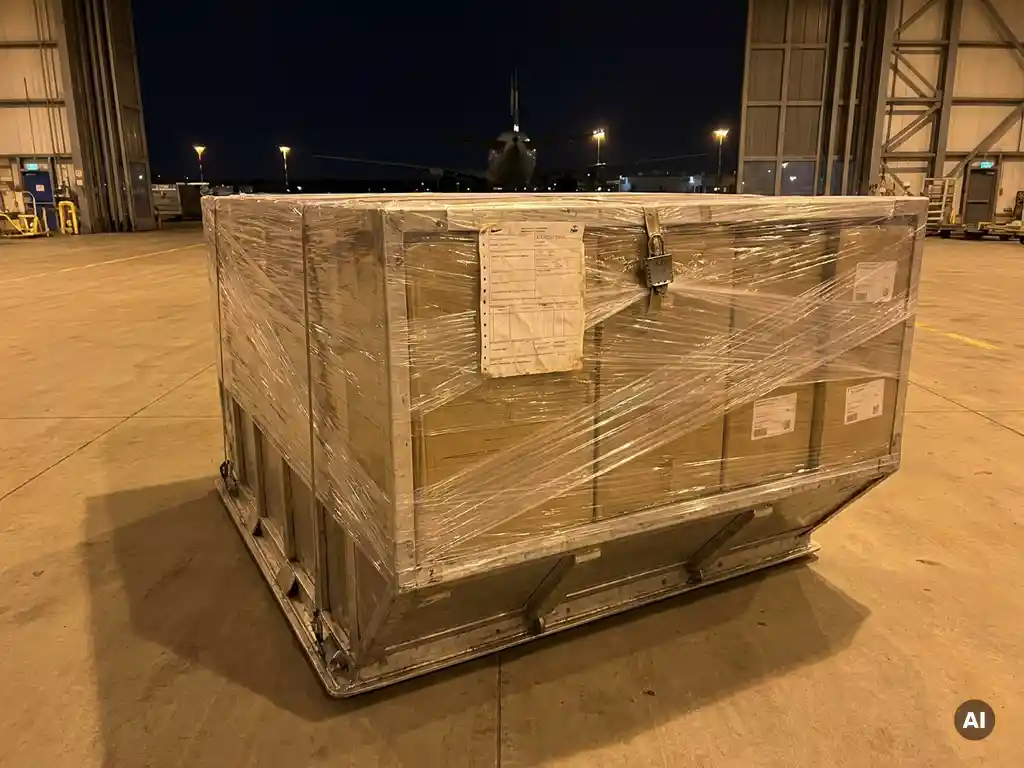
Cargo insurance for air freight shipments to Africa works by covering the commercial value of your goods against loss, theft, or damage during transit, from the point of departure in Europe to the final destination. Standard carrier liability under international conventions covers only a fraction of a shipment’s actual value, which makes separate cargo insurance essential for any business shipping goods to destinations like Nigeria, Ghana, Kenya, or Tanzania. The sections below address the most common questions businesses ask before arranging freight insurance coverage for their African shipments.
What does cargo insurance for air freight actually cover?
Cargo insurance for air freight covers physical loss or damage to goods during transit, including loading, unloading, and temporary storage at intermediate points. A standard all-risks policy is the most comprehensive option, covering accidental damage, theft, and total loss. More limited policies cover only named perils such as fire, collision, or aircraft accidents.
For shipments moving from Europe to Africa, an all-risks policy typically includes:
- Total loss of the shipment
- Partial loss or damage caused during handling
- Theft at airports or transit hubs
- Water or weather damage during ground handling
- Damage caused by improper stowage by the carrier
What cargo insurance does not cover is equally important to understand. Most policies exclude inherent vice (goods that deteriorate by their own nature), improper packaging by the shipper, deliberate damage caused by the consignee, and delay-related losses unless the delay itself results from a covered event. Perishable goods require specific policy language to be covered at all.
Is cargo insurance mandatory for air freight shipments to Africa?
Cargo insurance is not legally mandatory for air freight shipments to Africa. No international aviation convention or African import regulation requires shippers to hold a cargo insurance policy. However, many banks, trade finance institutions, and buyers under certain Incoterms require proof of insurance before releasing payment or accepting delivery.
Under Incoterms such as CIF (Cost, Insurance and Freight) or CIP (Carriage and Insurance Paid To), the seller is contractually obligated to provide insurance. Under DDP (Delivered Duty Paid) arrangements, where the seller takes full responsibility for delivery to the buyer’s premises, including customs clearance, insurance is a practical necessity rather than a legal one. Without it, any loss in transit falls entirely on the exporting business.
Even when not required, skipping cargo insurance on shipments to African destinations is a significant commercial risk. Transit routes to cities like Lagos, Nairobi, or Dar es Salaam often involve multiple handling points, and the financial exposure from an uninsured loss can far outweigh the cost of a policy.
What’s the difference between carrier liability and cargo insurance?
Carrier liability is the limited legal obligation an airline has to compensate for lost or damaged cargo under international conventions. Cargo insurance is a separate policy that covers the actual commercial value of your goods. The two are not the same, and the gap between them can be substantial.
Under the Montreal Convention, which governs most international air freight, carrier liability is capped at approximately 22 Special Drawing Rights (SDR) per kilogram of gross weight. For a 100 kg shipment of electronics or pharmaceuticals worth tens of thousands of euros, that cap represents a fraction of the real loss.
Carrier liability also requires the shipper to prove the airline was at fault, which can be difficult and time-consuming. A cargo insurance policy, by contrast, pays out based on the insured value of the goods, regardless of who caused the loss, and without requiring lengthy legal proceedings against the carrier. For businesses shipping high-value goods to African destinations, relying solely on carrier liability is rarely adequate.
How is the insured value calculated for air freight to Africa?
The insured value for air freight cargo is typically calculated as the commercial invoice value of the goods, plus the cost of freight, plus an additional percentage (commonly 10%) to account for the cost of replacement, re-ordering, and any incidental expenses. This formula is often expressed as: CIF value plus 10%.
For DDP shipments where the exporter is responsible for all costs, including duties and taxes at destination, it is worth discussing with your insurer whether the insured value should also reflect the customs duties already paid or payable. If goods are lost after customs clearance but before final delivery, the duty cost may not be recoverable without specific policy language.
Underinsuring is a common mistake. If the declared insured value is lower than the actual value at the time of loss, many policies apply a proportional reduction to the payout, known as average. Businesses should review insured values regularly, particularly when commodity prices fluctuate or when shipping high-value goods such as machinery, medical equipment, or finished electronics.
What factors affect air freight insurance premiums for African destinations?
Air freight insurance premiums for shipments to Africa are influenced by the type of goods, their declared value, the specific destination country, the routing, the packaging standard, and the shipper’s claims history. Destinations perceived as higher risk for theft or handling damage typically attract higher rates.
The main factors insurers assess include:
- Commodity type: Electronics, pharmaceuticals, and high-value machinery carry higher premiums than industrial raw materials or spare parts
- Destination: Shipments to countries with complex logistics infrastructure or elevated theft risk may be rated differently than others
- Packaging and packing quality: Professionally packed and crated goods attract lower rates than loosely packed consignments
- Routing and transit points: Direct flights carry lower risk than multi-leg routings with several handling points
- Claims history: Businesses with a clean claims record typically qualify for better rates over time
- Coverage type: All-risks policies cost more than named-perils policies
Premiums for air cargo insurance are generally expressed as a percentage of the insured value. For standard commercial goods moving from Europe to major African hubs, rates are typically modest, but they vary and should be confirmed with a qualified insurer or freight forwarder who handles the specific trade lane regularly.
How do you file a claim if air freight cargo is lost or damaged?
To file a claim for lost or damaged air freight cargo, you must notify the carrier and your insurer promptly, document the damage thoroughly, and submit a formal claim with supporting evidence, including the air waybill, commercial invoice, packing list, and a survey report. Acting quickly is critical because most policies and conventions impose strict time limits.
The practical steps for filing an air cargo insurance claim are:
- Report damage to the carrier immediately: Visible damage must be noted on the delivery receipt at the time of collection. For concealed damage, most conventions require written notice to the carrier within 14 days of receipt
- Notify your insurer without delay: Most policies require prompt notification, and delays can complicate or invalidate a claim
- Document everything: Photographs of damaged packaging and goods, a written description of the loss, and any correspondence with the carrier should all be preserved
- Request a survey: For significant losses, insurers typically appoint an independent surveyor to assess the damage at destination
- Submit the claim file: This includes the air waybill, commercial invoice, packing list, survey report, and any carrier correspondence
For shipments delivered on a DDP basis, coordinating the claims process across origin, transit, and destination requires clear communication between the shipper, the freight forwarder, and the insurer. Businesses should keep complete documentation for every shipment, not only when damage is anticipated, as reconstructing records after a loss is significantly harder than maintaining them from the outset.
How EAF supports your cargo insurance for air freight to Africa
We have been arranging air freight shipments from Europe to Africa for over 30 years, and insurance is a topic our clients ask about on almost every first shipment. We help businesses navigate cargo insurance as part of a complete shipping solution, particularly for DDP deliveries where we take responsibility for the full journey to the buyer’s premises.
When you work with us, we support your insurance needs by:
- Advising on appropriate coverage levels for your specific commodity and destination, whether that is Nigeria, Ghana, Kenya, Tanzania, or elsewhere in Africa
- Ensuring the declared value on the air waybill is correctly stated to avoid complications at the claims stage
- Coordinating documentation across origin and destination to support any claim process
- Handling customs clearance and last-mile delivery under DDP terms, reducing the number of handoffs where loss or damage can occur
If you are shipping commercial goods from Europe to Africa and want to understand how to structure your insurance correctly, contact our team for a direct conversation. We give straightforward answers based on the specific trade lane, not generic advice.
Ähnliche Artikel
- What's Included in an Air Freight Quote to Africa?
- How Does Air Freight from Europe to South Africa Work?
- How Does Air Freight from Europe to Nigeria Work?
- What Documents Do You Need for Air Freight Export to Africa?
- What Is Air Freight Export and How Does It Work?
Dieser Inhalt wurde mithilfe von KI erstellt und kann Fehler enthalten.