
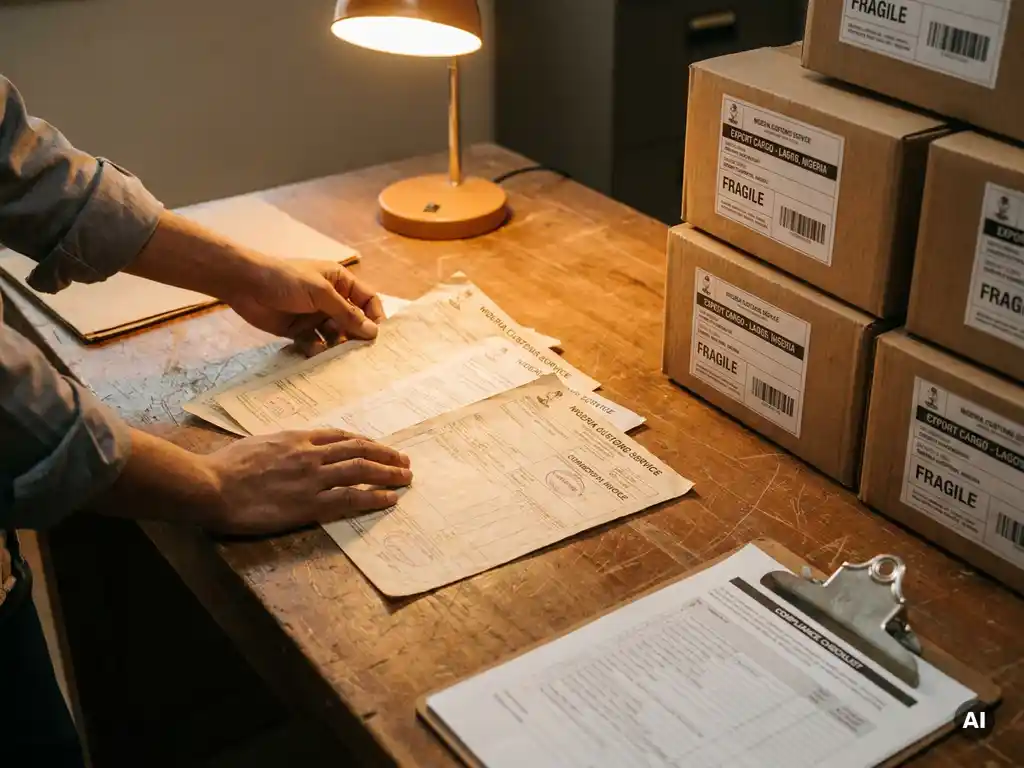
A freight forwarder with direct experience in Nigeria import compliance can handle Form M, SONCAP, and NAFDAC documentation on behalf of the exporting business. These are mandatory regulatory requirements for commercial shipments entering Nigeria, and getting them wrong leads to port delays, cargo holds, or outright rejection. The sections below explain each requirement and what to expect from a specialist freight forwarder.
What documents does Nigeria require for commercial imports?
Nigeria requires a core set of documents for all commercial imports, including a Bill of Lading or Air Waybill, commercial invoice, packing list, Form M, and a Combined Certificate of Value and Origin. Depending on the product category, additional certificates such as SONCAP or NAFDAC approval are mandatory before the goods can clear Nigerian customs.
The Nigerian Customs Service enforces these requirements strictly. Missing or incorrect documentation results in cargo being held at the port or airport, with demurrage and storage costs accumulating rapidly. For businesses shipping from Europe to Nigeria, preparing the full document set before departure is not optional: it is a condition of legal entry.
Beyond the standard set, Nigeria also requires a Pre-Arrival Assessment Report (PAAR), which is generated through the Nigeria Customs Service e-portal once all documents are submitted. The PAAR determines the applicable duty and must be available before physical examination of the goods. Businesses without a local clearing agent or a freight forwarder with Nigeria expertise often struggle at this stage.
What is Form M and who is responsible for obtaining it?
Form M is a mandatory Nigerian import declaration document that authorises the movement of goods into Nigeria. It is obtained by the Nigerian importer, not the exporter, through an authorised dealer bank in Nigeria before the goods are shipped. Without a valid Form M, the shipment cannot legally enter Nigeria and will not be processed by customs.
The Form M is linked to the Nigerian importer’s bank account and is registered with the Central Bank of Nigeria (CBN). It captures the nature of the goods, their value, and the terms of the transaction. The document is valid for a defined period and must be in place before the cargo departs the country of origin.
From the European exporter’s perspective, the practical responsibility is to ensure the Nigerian buyer has obtained Form M before the shipment is arranged. A knowledgeable freight forwarder will confirm this as part of the pre-shipment checklist. Shipping without a valid Form M in place is one of the most common causes of cargo being stranded at Nigerian ports.
Which goods require a SONCAP certificate for Nigeria?
SONCAP, the Standards Organisation of Nigeria Conformity Assessment Programme, applies to regulated products that fall under Nigerian industrial standards. This includes electrical equipment, electronics, machinery, building materials, chemicals, and a range of consumer goods. Any product on SONCAP’s regulated product list must carry a valid SONCAP certificate before it can be shipped to Nigeria.
The certificate is issued by SONCAP-accredited certification bodies in the country of export, following product testing and factory inspection where required. The process confirms that the goods meet Nigerian standards and are safe for the local market. The certificate must be presented at the Nigerian port of entry as part of the customs clearance package.
Exporters should check the current SONCAP product scope carefully, as the list of regulated goods is updated periodically. Products that appear straightforward, such as cables, switches, or basic machinery components, often fall within scope. A freight forwarder with Nigeria freight experience will identify SONCAP requirements during the pre-shipment phase, not after the goods have already arrived.
When does an import into Nigeria need NAFDAC approval?
NAFDAC (the National Agency for Food and Drug Administration and Control) approval is required for any product that falls within its regulatory mandate. This covers food and beverages, pharmaceuticals, medical devices, cosmetics, chemicals, detergents, and water products. Goods in these categories must be registered with NAFDAC before they can be imported commercially into Nigeria.
NAFDAC registration is obtained by the Nigerian importer or local distributor, not the overseas exporter. However, the process requires cooperation from the manufacturer, including product formulation data, labelling information, and manufacturing site documentation. The registration process can take several months, which means it must be initiated well before the first shipment is planned.
For businesses exporting regulated goods from Europe, the key point is that NAFDAC registration is a pre-condition for commercial entry, not something resolved at the port. Attempting to clear NAFDAC-regulated goods without a registration number results in seizure or destruction of the cargo. Exporters should confirm with their Nigerian buyer that valid NAFDAC registration is in place for the specific product before any shipment is arranged.
What should a freight forwarder do to support Nigeria compliance?
A freight forwarder supporting Nigeria shipments should carry out a pre-shipment compliance check that identifies all applicable requirements (Form M status, SONCAP scope, NAFDAC registration, and any other product-specific certifications). This check should happen before booking, not after the goods are packed and ready to move.
Beyond document identification, a competent freight forwarder should:
- Confirm that the Nigerian importer has obtained a valid Form M before the shipment is released
- Advise whether the product falls within the SONCAP regulated product list and which accredited body to engage
- Flag NAFDAC-regulated categories and confirm registration status with the importer before booking
- Prepare and verify the commercial invoice and packing list to meet Nigerian customs formatting requirements
- Coordinate the Pre-Arrival Assessment Report (PAAR) submission through the importer’s clearing agent
- Manage the full air freight or sea freight shipment to Nigeria with DDP (Delivered Duty Paid) options where the exporter wants duty-inclusive, door-to-door delivery
DDP delivery to Nigeria is increasingly requested by European exporters who want to hand over a complete, cleared shipment to their Nigerian buyer. This requires the freight forwarder to have a reliable local partner network capable of handling customs clearance, duty payment, and last-mile delivery. Not all forwarders can offer this end-to-end on the Nigeria corridor.
How EAF handles Form M, SONCAP and NAFDAC for shipments to Nigeria
We have been organising commercial shipments from Europe to Nigeria for over 30 years, and Nigeria import compliance is a core part of what we manage for our business clients. Our approach is practical and front-loaded: we address documentation requirements before the shipment moves, not when it arrives at the port.
For every Nigeria shipment, we:
- Verify Form M status with the Nigerian importer before booking is confirmed
- Screen the product against the current SONCAP regulated product list and advise on certification next steps
- Identify NAFDAC-regulated goods and confirm registration is in place before any cargo moves
- Prepare the full document set (invoice, packing list, origin documentation) to Nigerian customs standards
- Offer DDP delivery to Nigeria, covering air freight from Europe, customs clearance, duty payment, and final delivery to the consignee
- Coordinate through our established partner network in Lagos and other Nigerian hubs, built on long-standing personal relationships
We work exclusively with businesses that hold a customs registration number. Private shipments are outside our scope. If your company is planning a commercial export to Nigeria and needs a freight forwarder that understands Form M, SONCAP, and NAFDAC from the ground up, get in touch with us directly. You can also learn more about our freight services to Africa and how we structure shipments from Europe to West and East Africa.
Ähnliche Artikel
- How Do You Choose an Air Freight Forwarder for Shipping to Africa?
- What Is a Commercial Invoice and Why Is It Needed for Export?
- How Do You Ship Oversized or Heavy Cargo to Africa by Air?
- What Are the Most Common Air Freight Export Mistakes?
- How Does Air Freight from Europe to Nigeria Work?
Dieser Inhalt wurde mithilfe von KI erstellt und kann Fehler enthalten.