
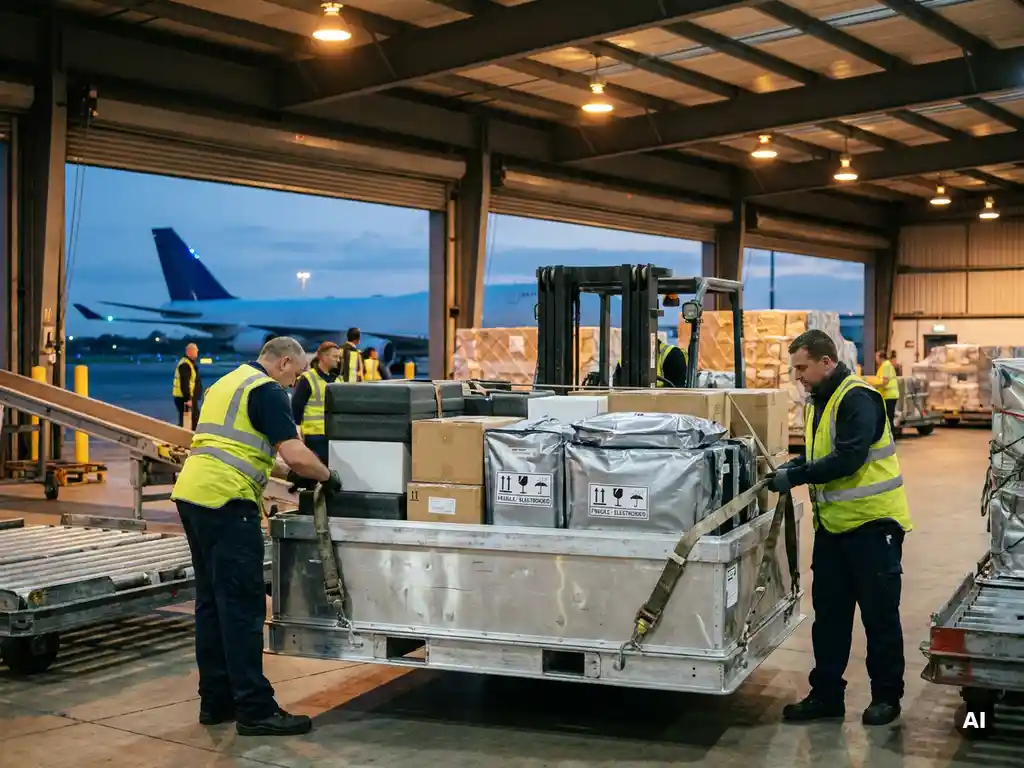
You can ship electronics to Africa by air using a licensed freight forwarder who handles air cargo consolidation, customs documentation, and destination clearance on your behalf. Air freight is the standard method for time-sensitive or high-value electronic goods moving from Europe to destinations such as Nigeria, Ghana, Kenya, and Tanzania. The sections below cover documentation, restrictions, transit times, packaging, duties, and how to choose the right logistics partner.
What documentation is required to ship electronics to Africa by air?
Shipping electronics to Africa by air requires a commercial invoice, packing list, airway bill (AWB), and a certificate of origin. Depending on the destination country and the type of equipment, you may also need an import permit, a conformity certificate, or type approval from the destination country’s telecommunications or standards authority.
The commercial invoice must state the correct HS tariff codes, the full description of the goods, the declared value, and the country of manufacture. Undervaluing electronics on customs documents is a serious compliance risk and can result in shipment delays, fines, or confiscation at the destination airport.
For regulated electronics such as radio transmitters, two-way communication devices, or medical equipment, additional licensing is often required before the goods can clear customs. Countries like Nigeria (through NAFDAC or NCC) and Kenya (through the Communications Authority) have specific type approval requirements. Your freight forwarder should confirm which permits apply before the shipment departs Europe.
Which electronics are restricted or prohibited on air freight to Africa?
Lithium batteries are the most commonly restricted item in air freight electronics shipments to Africa. Loose lithium-ion or lithium-metal batteries are classified as dangerous goods under IATA regulations and must comply with strict packing instructions, quantity limits, and labeling requirements. Batteries installed in devices are subject to separate, slightly less restrictive rules.
Other restricted categories include:
- Drones and UAVs — many African countries require import permits and aviation authority approval
- Encryption devices and certain communication equipment — subject to dual-use export controls under EU regulations
- Refurbished or used electronics — several countries restrict or prohibit the import of secondhand electrical goods to protect local markets and prevent e-waste
- Power banks above certain watt-hour thresholds — treated as dangerous goods in air cargo
It is worth noting that dangerous goods handling in air freight follows IATA Dangerous Goods Regulations (DGR), and your freight forwarder must be certified to handle and declare these shipments correctly. Radioactive materials (Class 7) fall entirely outside standard commercial air freight and are not handled through general cargo channels.
How long does air freight take from Europe to Africa?
Air freight from Europe to major African hubs typically takes between two and five business days from departure to delivery, depending on the destination, routing, and customs clearance speed. Direct services to hubs like Lagos (LOS), Accra (ACC), Nairobi (NBO), and Dar es Salaam (DAR) are available from several European airports, though many shipments transit through Middle Eastern or European connecting hubs.
Transit time alone does not equal delivery time. Customs clearance at the destination airport adds one to several days depending on the country, the completeness of your documentation, and whether the goods require inspection or additional permits. In Nigeria, for example, pre-arrival processing through the Nigeria Customs Service electronic system can accelerate clearance, but only if documents are submitted correctly and in advance.
For businesses shipping electronics on a regular basis, working with a freight forwarder who has established relationships at destination airports and local customs offices can meaningfully reduce clearance delays. Air freight routes to Africa that are served by consolidated cargo solutions also offer more predictable transit schedules than ad hoc bookings.
How should electronics be packaged for air freight to Africa?
Electronics shipped by air to Africa should be packaged in original manufacturer packaging where possible, or in purpose-built export cartons with adequate internal cushioning. Air freight involves pressure changes, handling at multiple transfer points, and varying temperature conditions, all of which can damage improperly packed equipment.
Key packaging requirements for air cargo electronics include:
- Anti-static bags for circuit boards, chips, and sensitive components
- Foam inserts or bubble wrap to prevent movement inside the carton
- Double-walled corrugated cartons rated for the gross weight of the contents
- Clear labeling including fragile markings, orientation arrows, and shipper/consignee details on the outer carton
- Lithium battery labels affixed to any carton containing battery-powered devices, in compliance with IATA packing instructions
For high-value electronics, consider whether cargo insurance is appropriate. Air cargo is generally safer than sea freight in terms of physical handling, but electronics remain a target for theft at certain transit points. Declared value and cargo insurance should reflect the actual commercial value of the shipment.
What are the import duties and taxes on electronics in African countries?
Import duties on electronics in African countries vary widely, ranging from zero to over 35% depending on the product category, country of destination, and applicable trade agreements. Most African countries apply a combination of import duty, value-added tax (VAT), and in some cases excise duties or levies specific to telecoms or technology goods.
In Nigeria, electronics such as laptops, mobile phones, and consumer devices attract duties under the ECOWAS Common External Tariff (CET), with rates typically between 5% and 20% depending on the HS code. Ghana applies similar CET rates as a fellow ECOWAS member. Kenya, as part of the East African Community (EAC), applies the EAC Common External Tariff, with additional levies such as the Import Declaration Fee (IDF) and Railway Development Levy (RDL) adding to the landed cost.
Businesses shipping electronics under a DDP (Delivered Duty Paid) arrangement have duties, taxes, and clearance costs bundled into the freight price. This removes uncertainty for the consignee and avoids shipments being held at the port of entry due to unpaid duties. DDP is particularly valuable for B2B electronics shipments where the buyer wants a predictable total cost and no involvement in local customs procedures.
Always confirm the correct HS tariff classification before shipping. Misclassification is one of the most common causes of customs disputes and unexpected duty assessments on electronics shipments to Africa.
Should you use a freight forwarder or ship electronics to Africa directly?
For B2B electronics shipments to Africa, using a specialist freight forwarder is strongly recommended over attempting to ship directly. Direct shipping through general courier networks typically does not cover the customs complexity, import licensing requirements, or last-mile delivery challenges that are routine in African markets.
A freight forwarder with Africa expertise adds value at every stage:
- Confirming which documents and permits are required before goods leave Europe
- Booking appropriate air cargo capacity and handling dangerous goods declarations for battery-containing devices
- Managing customs clearance at the destination airport through local agents or owned offices
- Coordinating final delivery to the consignee’s address under DDP terms
The risk of shipping electronics to Africa without specialist support is not just delays. Goods can be held indefinitely, assessed incorrect duties, or returned to origin if documentation is incomplete. For high-value electronics, the cost of a single failed shipment typically exceeds the cost of professional freight forwarding many times over. You can review the full range of logistics services available for Africa-bound cargo to understand what a complete solution covers.
How EAF Handles Electronics Shipments to Africa
We specialize in air freight from Europe to Africa, with over 30 years of operational experience in markets including Nigeria, Ghana, Kenya, and Tanzania. For electronics shipments specifically, we manage the full process so that businesses can focus on their supply chain rather than customs compliance.
Our services for electronics air freight to Africa include:
- DDP delivery — we handle all import duties, taxes, and customs clearance at destination, delivering goods duty-paid to the consignee
- Documentation review — we verify commercial invoices, HS codes, and import permit requirements before departure to prevent clearance issues
- Dangerous goods handling — we are IATA-certified and manage lithium battery declarations and other regulated electronics correctly
- Local partner network — we work with established agents at destination airports in Lagos, Accra, Nairobi, and Dar es Salaam for reliable last-mile coordination
- ISO 9001-certified processes — our quality management system ensures consistent handling and documentation standards across all shipments
If you are planning an electronics shipment to Africa and want a clear quote including duties and delivery, contact us directly to discuss your requirements.
Ähnliche Artikel
- What is NAFDAC and which goods does it affect for air freight to Nigeria?
- How Do You Ship High-Value Goods to Africa by Air?
- How Should You Package Goods for Air Freight to Africa?
- What Causes Air Freight Delays and How Can You Avoid Them?
- How Do You Label and Mark Cargo for Export by Air?
Dieser Inhalt wurde mithilfe von KI erstellt und kann Fehler enthalten.