
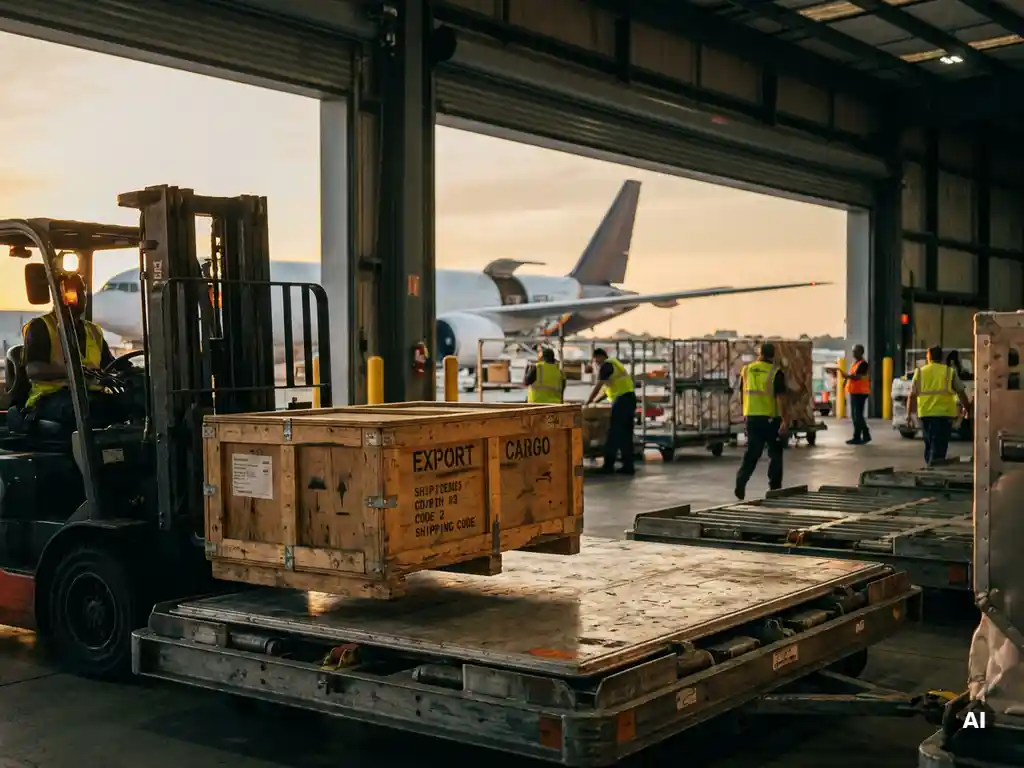
Shipping high-value goods to Africa by air requires advance planning, correct documentation, and a freight forwarder with genuine on-the-ground knowledge of African customs procedures. The process is manageable for businesses that prepare correctly, but the margin for error is small: mistakes in valuation, licensing, or documentation can result in costly delays or seizure at the border. The sections below answer the most common questions businesses ask before shipping valuable cargo from Europe to Africa.
What counts as high-value cargo in air freight?
High-value cargo in air freight typically refers to shipments where the goods carry significant monetary worth, high replacement cost, or elevated theft risk. Most airlines and freight forwarders apply a threshold of around USD 1,000 per kilogram or a total shipment value that triggers special handling and declaration requirements. Common categories include electronics, pharmaceuticals, precious metals, jewelry, luxury goods, and industrial equipment.
The classification matters because it determines how the shipment is handled at every stage. Airlines assign high-value cargo to secure storage areas, restrict access to authorized personnel, and require specific documentation beyond a standard air waybill. Customs authorities in destination countries also apply stricter scrutiny to declared high values, which directly affects duties, taxes, and release times.
For businesses shipping to markets like Nigeria, Kenya, or Ghana, it is worth noting that the declared customs value must match the commercial invoice precisely. Undervaluation is a common compliance risk and can result in penalties or confiscation.
What special handling requirements apply to valuable shipments?
Valuable shipments in air freight require secure storage, restricted access, chain-of-custody documentation, and in many cases enhanced packaging. Airlines classify these shipments under a Valuable Cargo (VAL) designation, which triggers a separate handling protocol from acceptance at origin through delivery at destination.
Key handling requirements typically include:
- Tamper-evident packaging: Goods must be sealed in a way that makes unauthorized access visible.
- Secure storage at transit points: VAL cargo is held in locked, monitored facilities rather than standard cargo warehouses.
- Limited personnel access: Only authorized staff may handle or move the shipment.
- Separate air waybill entries: High-value items are often listed individually on the air waybill rather than grouped.
- Advance notification to destination agents: The receiving party must be informed and ready to collect promptly to minimize dwell time.
For shipments moving on a door-to-door basis under Delivered Duty Paid (DDP) terms, the freight forwarder takes responsibility for coordinating these steps end to end, including handover to the consignee. This significantly reduces the risk of goods sitting unattended in a cargo terminal.
How does customs clearance work for high-value goods entering Africa?
Customs clearance for high-value goods entering African countries follows a stricter review process than standard cargo. Authorities typically require a detailed commercial invoice with accurate values, a packing list, a certificate of origin, and in some cases import licenses or pre-shipment inspection certificates. Declared values are cross-checked against reference price databases, and discrepancies trigger physical inspection.
The clearance process varies by country, but the core steps are consistent:
- Document submission: The importer or their clearing agent submits all required documents to customs before or immediately upon the aircraft’s arrival.
- Tariff classification: Customs assigns an HS code to the goods, which determines the applicable duty rate.
- Valuation assessment: The declared value is verified. For high-value goods, customs may apply transaction value, WTO valuation methods, or internal reference prices.
- Duty and tax payment: Import duties, VAT, and any applicable levies must be settled before goods are released.
- Physical inspection (if triggered): High-value shipments are more likely to be selected for physical examination.
Under DDP (Delivered Duty Paid) shipping arrangements, all duties and taxes are paid by the shipper before delivery. This removes the customs burden from the African buyer entirely and provides predictable landed costs, which is particularly valuable for high-value goods where duty rates can be substantial.
What insurance do you need when shipping high-value goods by air to Africa?
When shipping high-value goods by air to Africa, you need all-risk cargo insurance that covers the full commercial value of the goods from origin to final destination. Standard carrier liability under the Montreal Convention is capped at approximately 22 Special Drawing Rights (SDR) per kilogram, which falls far short of the actual value of most high-value shipments. Separate cargo insurance is not optional for valuable goods.
An appropriate policy for high-value air freight to Africa should cover:
- Loss or damage during transit, including loading and unloading
- Theft, including pilferage
- Damage during customs examination or temporary storage
- Coverage through to the final delivery address, not just the airport
Businesses should confirm that the policy extends to all transit points and to the specific destination country. Some insurers apply exclusions or higher premiums for certain African markets. It is also worth checking whether the insurance covers DDP shipments where the shipper retains ownership and risk until delivery is complete.
Which African destinations have the most complex import regulations for valuable cargo?
Nigeria and Ghana in West Africa, and Kenya and Tanzania in East Africa, are among the most active destinations for high-value air freight from Europe, and each has its own regulatory complexity. Nigeria applies some of the strictest import controls on the continent, including mandatory pre-shipment inspection for certain goods, Form M import documentation, and tight foreign exchange controls that affect how import duties are settled.
Ghana requires a Tax Identification Number (TIN) for all commercial importers and enforces strict customs valuation procedures. Kenya has a relatively efficient customs authority (KRA), but high-value goods are subject to close scrutiny and specific licensing requirements depending on the product category. Tanzania aligns broadly with East African Community (EAC) trade rules but has its own documentation requirements for high-value and restricted goods.
Across all these markets, the common challenge is that import regulations change frequently. A freight forwarder with active, local representation in these countries is more reliable than one relying on third-party agents with no direct accountability.
How do you choose a freight forwarder for high-value air shipments to Africa?
Choose a freight forwarder for high-value air shipments to Africa based on their direct presence in destination countries, their track record with similar cargo categories, their ability to handle DDP delivery, and their IATA accreditation. Experience with African customs procedures is the single most important factor, as it determines whether your goods clear quickly or sit in a bonded warehouse accumulating storage fees.
Specific criteria to evaluate:
- Local representation: Does the forwarder have their own offices or established joint-venture partners in Nigeria, Ghana, Kenya, or your target destination? This is not the same as a network membership.
- DDP capability: Can they manage duty payment and last-mile delivery on your behalf, or do they hand off at the airport?
- IATA accreditation: This confirms the forwarder meets international standards for air cargo handling and documentation.
- Customs knowledge: Ask directly about their experience with your specific product category and destination country.
- Communication: For high-value shipments, you need proactive updates and a named contact, not a generic tracking system.
Businesses can review the full range of Africa freight options available before committing to a logistics partner.
How EAF handles high-value air freight to Africa
We specialize in air freight from Europe to Africa, with direct representation in key markets including Nigeria, Ghana, and Kenya. For businesses shipping valuable cargo, we offer a structured end-to-end service that removes the complexity of African customs from the shipper’s side.
What we provide for high-value shipments:
- DDP delivery to the consignee’s door, with all duties and taxes settled in advance
- Coordination with local customs authorities and licensed clearing agents at destination
- IATA-accredited air freight documentation and booking
- Guidance on import licensing, valuation requirements, and restricted product categories for each destination country
- Personal account management with direct contact throughout the shipment
If you are shipping high-value goods from Europe to Africa and need a freight forwarder with genuine local knowledge, contact us directly to discuss your shipment requirements.
Ähnliche Artikel
- How Should You Package Goods for Air Freight to Africa?
- How Does Insurance Work for Air Freight Shipments to Africa?
- How Long Does Air Freight from Europe to Africa Take?
- What Documents Do You Need for Air Freight Export to Africa?
- What Is Air Freight Export and How Does It Work?
Dieser Inhalt wurde mithilfe von KI erstellt und kann Fehler enthalten.