
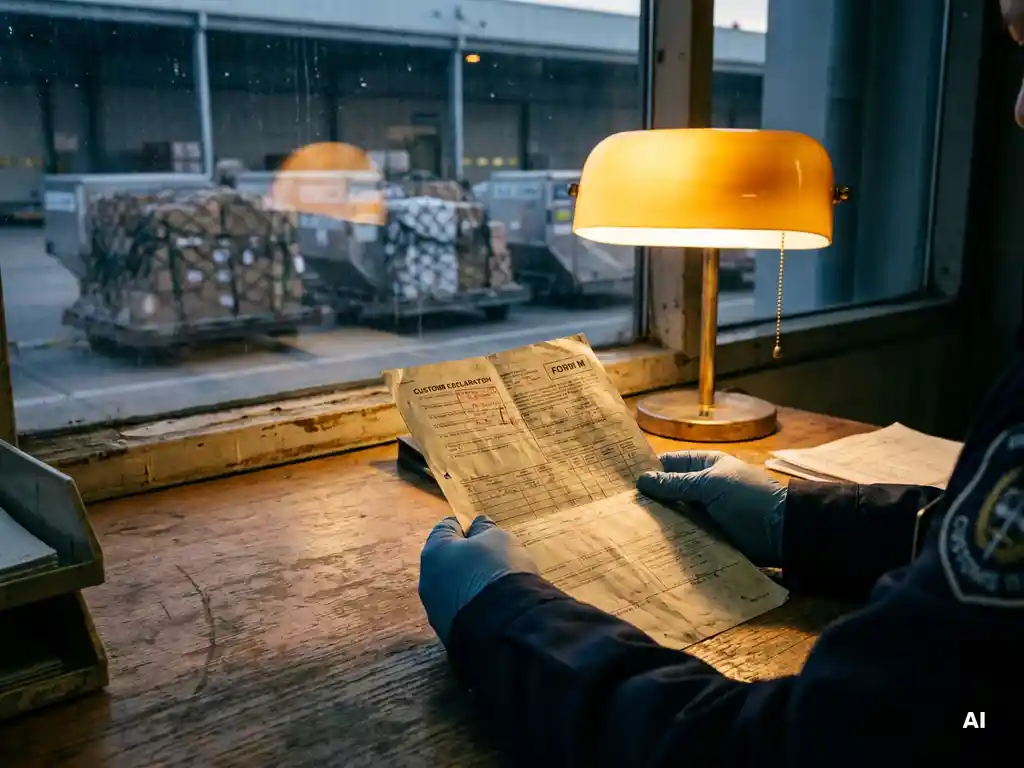
Form M is a mandatory import declaration document issued by Nigerian banks on behalf of the Central Bank of Nigeria (CBN). It is required for all commercial goods entering Nigeria, including shipments arriving by air freight, before those goods can clear customs. Without a valid Form M, no import transaction can be legally processed in Nigeria, regardless of the mode of transport.
Form M serves as the foundation of Nigeria’s import monitoring system, linking the importer’s bank, the CBN, and the Nigeria Customs Service (NCS) into a single regulated chain. The sections below address the most common questions businesses encounter when shipping goods from Europe to Nigeria.
Who is responsible for obtaining Form M in Nigeria?
The Nigerian importer is responsible for obtaining Form M. This is not a document that the exporter, freight forwarder, or airline can apply for on behalf of the consignee. The importer must approach an authorized dealer bank in Nigeria, which then processes and submits the application to the Central Bank of Nigeria through the Trade Monitoring System (TRMS).
This means that before any air freight shipment leaves Europe, the Nigerian buyer must already have initiated the Form M process with their bank. Exporters should confirm with their Nigerian counterpart that Form M has been opened before cargo is booked or dispatched. Delays caused by missing documentation on the receiving end are one of the most common causes of shipment holds at Lagos or Abuja airports.
What documents are required to open a Form M?
To open a Form M in Nigeria, the importer must submit a set of core documents to their authorized dealer bank. The exact requirements can vary slightly between banks, but the standard documentation set includes the following:
- Proforma invoice from the supplier, showing the goods description, quantity, unit price, and total value
- Import duty payment evidence or confirmation of the applicable HS code classification
- Certificate of incorporation of the importing company
- Valid Tax Identification Number (TIN)
- Manufacturer’s certificate or product standard documentation, where applicable
- Pre-shipment inspection certificate, required for certain product categories under NAFDAC, SON, or other regulatory agencies
The proforma invoice is the most critical document at this stage. It must accurately reflect the goods being shipped, because the Form M is tied directly to the declared value and description. Any discrepancy between the Form M and the actual shipment can trigger delays, penalties, or seizure at the port of entry. Businesses shipping goods to Nigeria should ensure their commercial documentation is precise from the outset.
How long does Form M processing take for air freight shipments?
Form M processing typically takes between three and seven working days once all required documents have been submitted to the authorized dealer bank. However, the total timeline from application to approval can extend further if the CBN requires additional review or if the importer’s documentation is incomplete.
For air freight shipments, timing is especially critical. Air cargo moves fast, and if Form M is not in place before the goods arrive in Nigeria, the shipment will be held at the airport pending regularization. This creates demurrage charges and potential complications with customs. Experienced importers open Form M before the shipment is even booked, not after it has departed. Exporters in Europe should build this lead time into their delivery schedules when planning air freight to Nigeria.
What happens if a shipment arrives in Nigeria without a valid Form M?
If an air freight shipment arrives in Nigeria without a valid Form M, the goods cannot be legally cleared through customs. The Nigeria Customs Service will place a hold on the cargo, and the importer will be required to regularize the Form M retrospectively, a process that is more complex, more expensive, and significantly slower than obtaining it before shipment.
The consequences of arriving without Form M include:
- Cargo detention at the airport, accumulating storage and demurrage fees
- Mandatory post-arrival Form M application, subject to CBN approval
- Potential financial penalties imposed by the Nigeria Customs Service
- Risk of outright seizure if the goods are classified as prohibited or if the importer cannot demonstrate legitimate trade intent
In practice, retroactive Form M approval is not guaranteed and can take weeks. For time-sensitive cargo, this can result in significant commercial losses. The clear guidance from the CBN and customs authorities is that Form M must be in place before goods are shipped, not after they arrive.
Which goods are exempt from the Form M requirement?
Not all imports into Nigeria require a Form M. The CBN has defined specific exemption categories, and understanding these can simplify the documentation process for certain shipments. Goods commonly exempt from the Form M requirement include:
- Personal effects and used household items accompanying a returning Nigerian resident
- Diplomatic cargo covered by diplomatic immunity provisions
- Gifts and goods with a value below the CBN’s minimum threshold for commercial imports (this threshold should always be confirmed with the importer’s bank, as it is subject to policy revision)
- Certain humanitarian aid and relief goods, subject to government approval
It is important to note that these exemptions apply almost exclusively to non-commercial shipments. For B2B cargo, meaning goods purchased or transferred between businesses, Form M is virtually always required regardless of value. Companies should never assume an exemption applies without explicit confirmation from their Nigerian bank or a qualified customs consultant.
How does Form M connect to the PAAR and customs clearance process?
Form M is the starting point of Nigeria’s import documentation chain, and it directly enables the Pre-Arrival Assessment Report (PAAR). Once Form M is approved and the shipment is in transit, the importer or their customs broker uses the Form M number to file an electronic declaration on the Nigeria Customs Service’s Trade Modernisation Project system. This generates the PAAR, which is the basis for duty assessment before the goods arrive.
The PAAR process in Nigeria works as follows:
- Form M is opened and approved by the authorized dealer bank and CBN
- The supplier ships the goods and provides the final commercial invoice, bill of lading or air waybill, and packing list
- The importer or customs agent submits these documents electronically to generate the PAAR
- The Nigeria Customs Service assesses the applicable duties and levies
- The importer pays the assessed duties, and a duty payment receipt is issued
- The PAAR and proof of payment are presented at the port or airport for physical release of the goods
For air freight shipments, having the PAAR ready before or immediately upon arrival is essential to avoid storage fees. The entire customs clearance process in Nigeria is built around the Form M number, which means that any error or delay in the Form M application cascades through every subsequent step, including PAAR generation, duty payment, and final release.
How EAF supports your Nigeria import documentation
Nigeria’s import documentation requirements, from Form M to PAAR and customs clearance, are detailed and time-sensitive. We work with businesses shipping from Europe to Nigeria and help ensure that the freight side of the process is coordinated with the documentation requirements on the Nigerian end.
Here is what we handle for our business clients:
- Coordination with the Nigerian consignee to confirm Form M status before cargo is booked
- Preparation of accurate commercial documentation (commercial invoice, packing list, air waybill) that aligns with the Form M details
- Air freight routing from Europe to Nigeria, including Lagos (LOS) and Abuja (ABV)
- DDP (Delivered Duty Paid) shipments, where we manage the full chain including customs clearance and last-mile delivery in Nigeria
- Guidance on regulatory requirements from agencies such as NAFDAC or SON that affect Form M documentation
If your business is shipping goods from Europe to Nigeria and you need a freight partner who understands the documentation process, get in touch with us directly. We provide straightforward advice and take responsibility for the logistics so that your cargo arrives on time and clears without avoidable delays.
Ähnliche Artikel
- Why is air freight to Nigeria delayed at customs?
- How Do You Book an Air Freight Shipment to Africa?
- How Do You Ship to Landlocked African Countries by Air?
- What Is Air Charter and When Does It Make Sense for Shipping to Africa?
- Air Freight vs. Sea Freight: Which Is Right for Shipping to Africa?
Dieser Inhalt wurde mithilfe von KI erstellt und kann Fehler enthalten.