
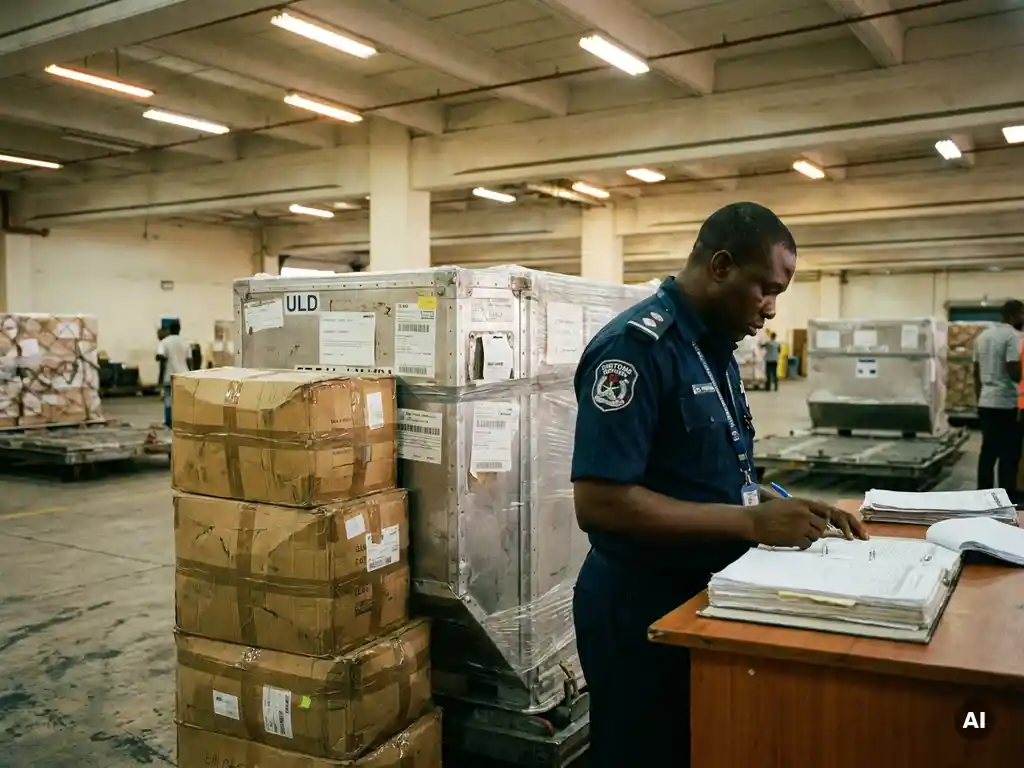
Air freight to Nigeria is frequently delayed at customs due to incomplete or incorrect documentation, pre-shipment inspection requirements, and regulatory checks that apply to a wide range of imported goods. These delays are not random: they follow predictable patterns that businesses shipping from Europe to Nigeria encounter regularly. Understanding the root causes helps exporters prepare shipments that move through Lagos airport customs with fewer interruptions.
What are the most common causes of customs delays in Nigeria?
The most common causes of customs delays in Nigeria are documentation errors, missing permits, valuation disputes, and physical examination queues at Lagos airport. Nigerian Customs Service (NCS) officers are required to verify that every commercial shipment complies with import regulations before release, and any discrepancy in the paperwork triggers a hold.
In practice, the delays that affect air freight shipments most often fall into a few recurring categories:
- Incorrect or incomplete commercial invoices: missing HS codes, understated values, or vague cargo descriptions are among the most frequent triggers for examination
- Missing import permits or product-specific licences: certain goods including pharmaceuticals, food products, chemicals, and electronics require approvals from agencies such as NAFDAC or the Standards Organisation of Nigeria (SON) before customs will release them
- Valuation disputes: Nigerian customs uses reference price databases and may challenge declared values, particularly for branded goods or machinery
- Pre-shipment inspection non-compliance: shipments subject to the PAAR (Pre-Arrival Assessment Report) system that arrive without the required documentation are automatically flagged
- Examination backlogs: high cargo volumes at Murtala Muhammed International Airport in Lagos create physical inspection queues that add days even to compliant shipments
For businesses exporting goods from Europe to Nigeria, the risk of delay is highest when a new product category is being shipped for the first time, when a consignee does not yet have an established customs number, or when documentation has been prepared without knowledge of Nigeria-specific requirements.
Which documents are required to clear air freight through Nigerian customs?
To clear air freight through Nigerian customs, a shipment must be accompanied by a commercial invoice, airway bill, packing list, Form M (the mandatory import declaration), and a PAAR generated through the Nigeria Customs Single Window. Depending on the product category, additional regulatory certificates are required before clearance can proceed.
The core document set for Nigerian customs clearance includes:
- Commercial invoice: must state the full description of goods, HS code, country of origin, unit price, total value, and Incoterms
- Airway bill (AWB): issued by the airline or freight forwarder, must match the invoice details exactly
- Packing list: itemised breakdown of contents, weights, and dimensions per package
- Form M: a mandatory import declaration that the Nigerian consignee must open through an approved bank before the shipment departs the origin country
- Pre-Arrival Assessment Report (PAAR): generated by the importer’s customs agent through the Nigeria Customs Service portal once the Form M is in place
- Product-specific licences: NAFDAC registration for food, drugs, and cosmetics; SON conformity assessment certificates for regulated products; and import permits for controlled items
A common and costly mistake is shipping before the Form M has been opened and approved. Without a valid Form M, the shipment cannot legally be cleared, and demurrage charges accumulate while the documentation is arranged after arrival. Exporters working with an experienced freight forwarding specialist for Africa routes can avoid this by ensuring all pre-shipment steps are completed before the cargo leaves Europe.
How does Nigeria’s pre-shipment inspection process affect delivery times?
Nigeria’s pre-shipment inspection requirements add time to the delivery process because certain product categories must receive regulatory approval before or immediately upon arrival. The Form M and PAAR system effectively requires importers to begin the customs process weeks before a shipment departs, meaning delays in opening the Form M directly translate into delays at the airport.
Nigeria operates a destination inspection model rather than a pure pre-shipment model, but the PAAR must be generated before a shipment arrives. If the PAAR is not ready when the aircraft lands, the shipment is held in the bonded warehouse at Lagos airport until the document is produced. Warehouse storage fees begin immediately, and the customs queue restarts from the point the PAAR is submitted.
For goods that also require NAFDAC or SON certification, those approvals must typically be in place before the Form M can be opened at all. This means the regulatory timeline for a new product can stretch to several weeks before the first shipment even departs Europe. Businesses that plan these steps in advance and work with agents who understand Nigerian import customs requirements can compress this timeline significantly.
What happens if Nigerian customs places a hold on a shipment?
When Nigerian customs places a hold on an air freight shipment, the cargo is detained in a bonded warehouse at the port of entry (typically Lagos airport) until the issue is resolved. The importer or their licensed customs agent must respond to the specific reason for the hold, which is formally communicated through the customs portal or directly to the agent.
The consequences of a customs hold depend on the reason and how quickly it is addressed:
- Documentation holds: resolved by submitting the missing or corrected document. These can sometimes be cleared within one to three working days if the agent responds promptly.
- Valuation disputes: require the importer to provide supporting evidence of the declared value (purchase orders, bank transfer records, manufacturer price lists). These disputes can take longer and may result in additional duties being assessed.
- Examination holds: the shipment is physically inspected by customs officers. The timeframe depends on the examination queue and the complexity of the cargo.
- Regulatory holds: if a required licence or certificate is missing, the shipment cannot be released until the document is obtained. In some cases, goods may be seized or returned to the shipper if the product is not legally importable.
Throughout any hold period, warehouse storage and handling fees continue to accrue. For time-sensitive cargo, the cost of a hold can quickly exceed the original freight cost. Having a licensed customs agent in Nigeria who can act immediately on any hold notice is essential for minimising these costs.
How can shippers reduce the risk of air freight delays at Nigerian customs?
Shippers can reduce the risk of Nigerian customs clearance delays by preparing complete and accurate documentation before the shipment departs, opening the Form M well in advance, and working with a freight partner who has direct experience with Nigerian import regulations. Most delays are avoidable with proper pre-shipment coordination.
The most effective steps exporters can take include:
- Classify goods correctly: use the correct HS code from the start. Misclassification is one of the leading causes of examination and valuation disputes at Lagos airport customs.
- Open the Form M early: the Nigerian consignee should open the Form M through their bank as soon as the order is confirmed, not after the shipment has been booked.
- Verify licence requirements before shipping: check whether the product requires NAFDAC registration, SON certification, or any other regulatory approval before the first shipment is arranged.
- Declare accurate values: invoice values should reflect actual transaction prices and be supported by documentation. Attempting to understate values to reduce duties routinely results in holds and penalties that cost more than the duty saved.
- Use DDP (Delivered Duty Paid) terms where possible: shipping on DDP terms transfers the customs clearance responsibility to the freight forwarder, ensuring that a professional with Nigeria-specific expertise handles the process end to end.
- Choose a forwarder with established relationships in Nigeria: local agent relationships and familiarity with the customs portal reduce response times when issues arise.
Businesses that ship regularly to Nigeria benefit from standardising their documentation templates for each product category and conducting a compliance review whenever a new product is added to their export range. Consistency across shipments builds a track record that can also support smoother processing over time. For a broader view of what reliable shipping to the region requires, the Africa freight overview covers the key considerations across destinations.
How EAF helps businesses avoid customs delays on air freight to Nigeria
We specialise in air freight from Europe to Nigeria and handle the customs process as an integrated part of every shipment, not as an afterthought. Our approach is built around preventing delays before they happen, not reacting to them after cargo is already on hold at Lagos airport.
When you ship with us, we provide:
- Pre-shipment documentation review: we check invoices, HS codes, and product descriptions before the shipment is booked to catch errors that would trigger a customs hold
- Form M and PAAR coordination: we work directly with the consignee and their bank to ensure the Form M is opened and the PAAR is generated before departure
- Licence and regulatory guidance: we advise on NAFDAC, SON, and other product-specific requirements at the outset, so there are no surprises on arrival
- DDP delivery to Nigeria: we offer Delivered Duty Paid shipments, meaning we manage import duties, customs clearance, and last-mile delivery on your behalf, giving your Nigerian consignee a seamless, duty-paid arrival
- Local agent network: our established partners in Lagos respond immediately to any customs query, minimising hold times and storage costs
We work exclusively with businesses, and our clients receive direct, personal support from experienced freight professionals who know the Nigeria route in detail. If your air freight to Nigeria is being delayed at customs, or if you want to set up a shipping process that avoids those delays from the start, get in touch with our team for a straightforward assessment of your requirements.
Ähnliche Artikel
- How Do You Ship Spare Parts to Africa by Air?
- What's Included in an Air Freight Quote to Africa?
- What Is Air Charter and When Does It Make Sense for Shipping to Africa?
- How Do You Ship Oversized or Heavy Cargo to Africa by Air?
- What Goods Can and Can't Be Shipped to Africa by Air?
Dieser Inhalt wurde mithilfe von KI erstellt und kann Fehler enthalten.